







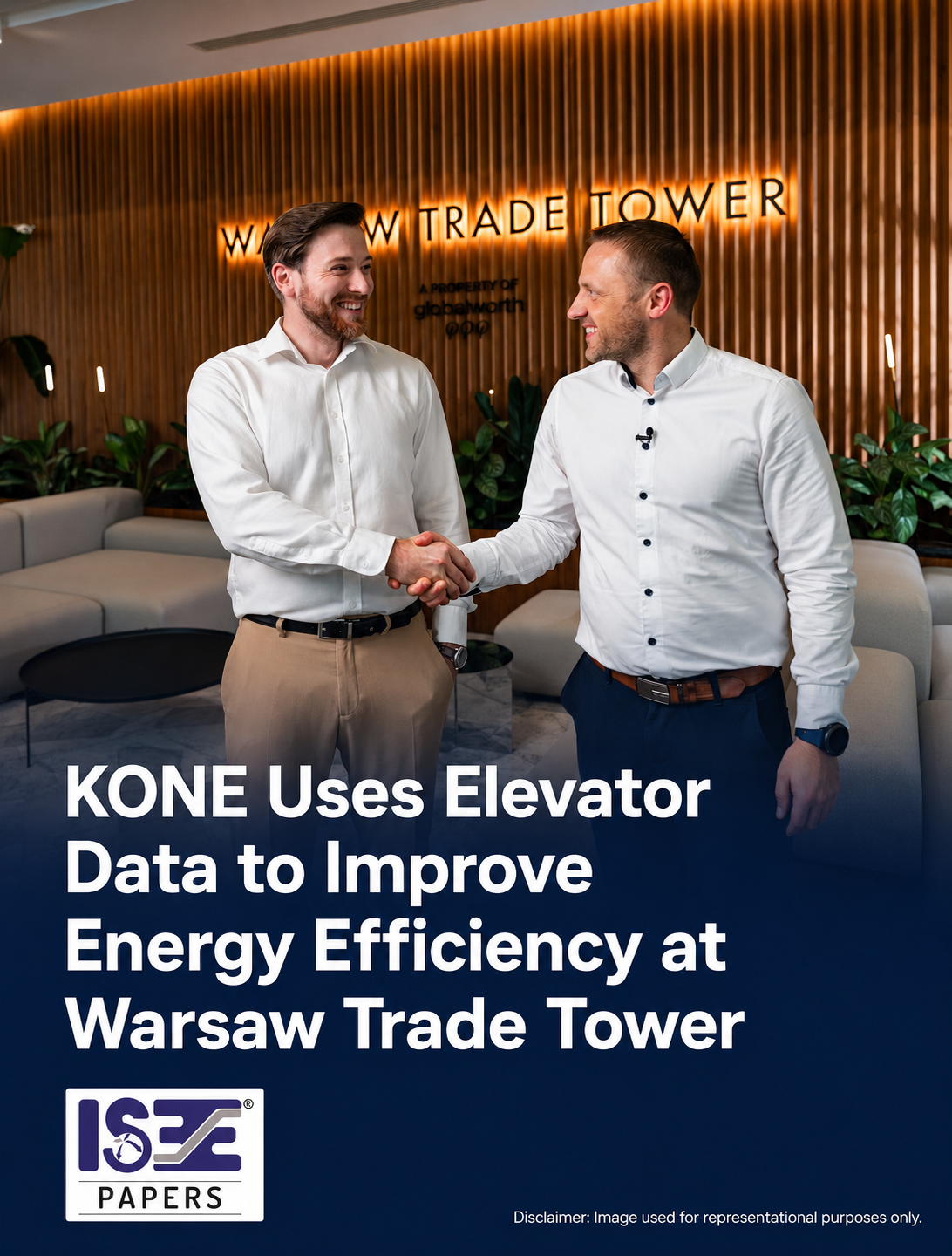
Elevator movement data at Warsaw Trade Tower is being used to help the building respond more accurately to changing occupancy levels. Through a collaboration between KONE and property company Globalworth, information from the tower’s connected elevators is being integrated with its building management system to support more efficient heating, ventilation and air-conditioning operations.
The initiative demonstrates how elevators can contribute to the wider digital infrastructure of a building, moving beyond vertical transportation to become a valuable source of operational intelligence.
Elevator Journeys Provide Occupancy Insights
Every elevator journey produces data about passenger movement between different levels of a building. At Warsaw Trade Tower, this information is analysed to estimate how occupancy changes across individual floors throughout the day and week.
These insights allow the property management team to understand when particular areas are busiest, lightly occupied or largely unused. The building management system can then adjust environmental services according to actual demand instead of relying entirely on predetermined operating schedules.
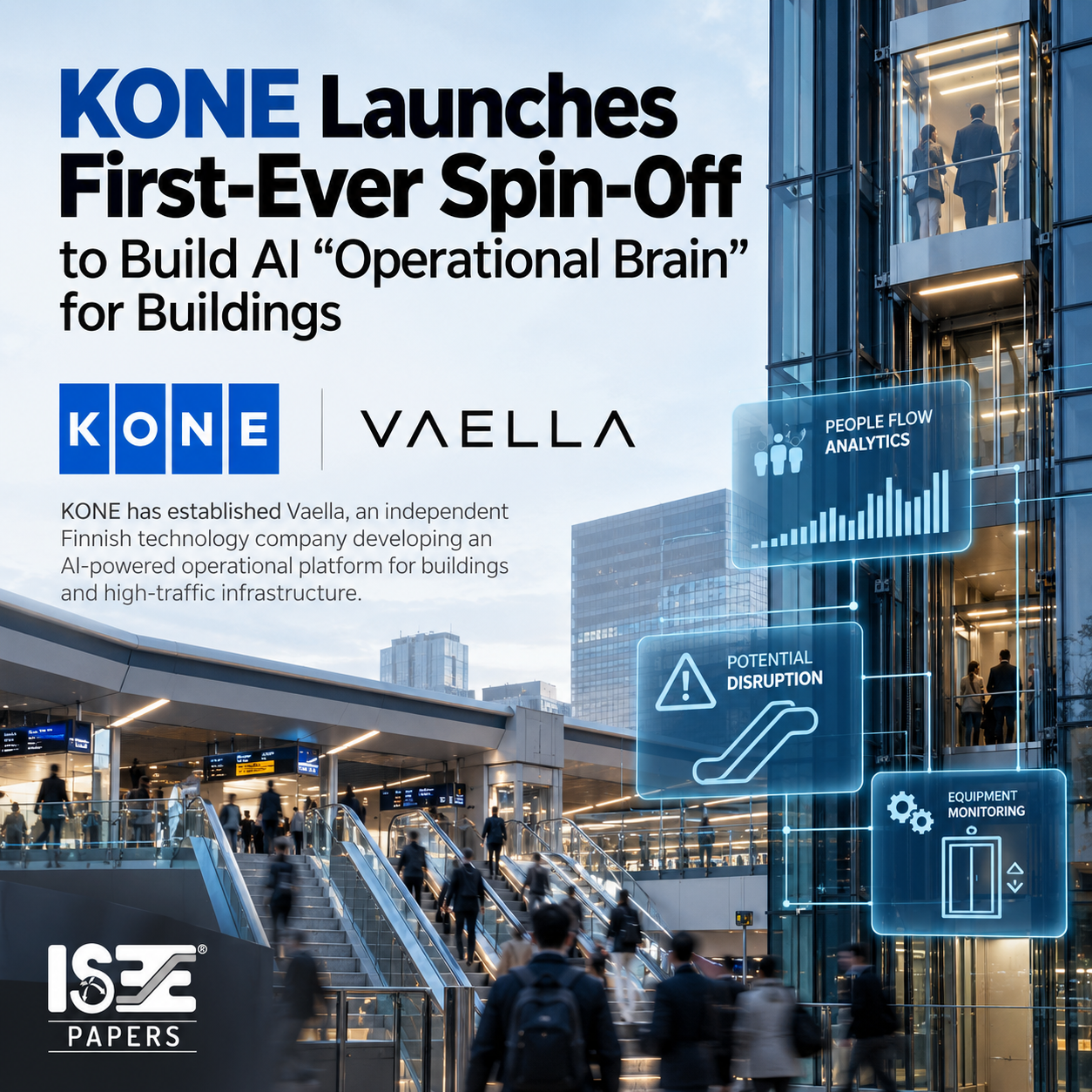
KONE’s connected elevator technology, supported by KONE 24/7 Connect, provides equipment data and analytics that can be incorporated into the building’s broader management platform. According to KONE, the system helps the property team assess real utility requirements on specific floors and identify opportunities for operational improvement. KONE’s original story
Reducing Dependence on Additional Occupancy Sensors
Office buildings frequently rely on separate ceiling-mounted sensors to monitor occupancy. Installing these devices throughout a high-rise property can involve considerable expense, technical coordination and disruption to tenants.
Warsaw Trade Tower’s approach makes use of data already being generated by its elevators. By interpreting passenger journeys, the building can develop occupancy profiles without installing an extensive new network of physical sensors across every floor.
Elevator data is only one part of the system. Its usefulness depends on integration with the building management platform and other sources of information. An energy optimisation system is also required to convert the occupancy estimates into automated changes to HVAC operations.
The project therefore focuses on connecting technologies that have traditionally functioned separately, allowing elevator systems and building services to exchange relevant operational information.
HVAC Operations Adjusted to Actual Demand
Heating, ventilation and air-conditioning systems can represent a substantial share of an office building’s total energy consumption. KONE noted that these systems typically account for close to half of the energy used by an office property.
Conventional HVAC systems often follow fixed schedules, such as operating at full capacity throughout standard business hours. However, hybrid working, flexible schedules and varying tenant requirements have made office occupancy less predictable.
At Warsaw Trade Tower, elevator data helps reveal how different floors are used in practice. If employees on one floor generally arrive later and remain in the office into the evening, the building can adjust environmental conditions around that pattern. Other areas can operate at reduced capacity when occupancy is low.
This demand-based approach is intended to maintain comfortable conditions when spaces are occupied while avoiding unnecessary energy use during quieter periods.
A Landmark Building with Strong Sustainability Credentials
The 208-metre Warsaw Trade Tower is owned and managed by Globalworth, a real estate company operating across Central and Eastern Europe.
The property achieved an “Outstanding” rating of 90.7% under the BREEAM In-Use v6 certification in 2024. At the time, it was reportedly the third-highest score received by an office building globally under the certification framework.
The elevator data initiative forms part of Globalworth’s continuing efforts to improve the tower’s environmental performance while maintaining a premium experience for tenants and visitors.
KONE and Globalworth have presented the collaboration as a cost-conscious method of extracting additional value from systems already installed in the building. Rather than treating elevators solely as transport equipment, the project positions them as part of a connected network capable of supporting decisions across the property.
Elevators Take on a Wider Smart-Building Role
The project reflects a broader shift in the elevator industry. Digitally connected units can provide information that supports predictive maintenance, traffic analysis and equipment performance monitoring. When this data is shared with other building platforms, its potential applications extend further.
At Warsaw Trade Tower, future applications could include occupancy-led cleaning schedules and reports that help tenants understand how effectively their leased areas are being used.
The concept could also support more informed space planning, particularly as companies reconsider office requirements in response to flexible and hybrid working practices.
KONE has not disclosed a quantified energy-saving result for the Warsaw project. The current initiative is focused on using real-time occupancy intelligence to improve building operations and create the conditions for measurable reductions in energy consumption.
The collaboration shows how existing elevator infrastructure can contribute to smarter and more sustainable building management. As high-rise properties become increasingly connected, elevator data may become an important input for managing energy, comfort and space more efficiently.