


Korea Land & Housing Corporation (LH) has announced a comprehensive improvement programme for elevators in its public housing developments, making air-conditioning systems mandatory in all newly ordered units.
The new requirements are intended to improve passenger comfort, safety and operating efficiency across LH apartment projects. They will apply to future multi-family housing developments commissioned by the corporation. LH will also seek to introduce the measures at projects already under construction wherever installation conditions permit. Asia Business Daily
Cooling becomes a standard requirement
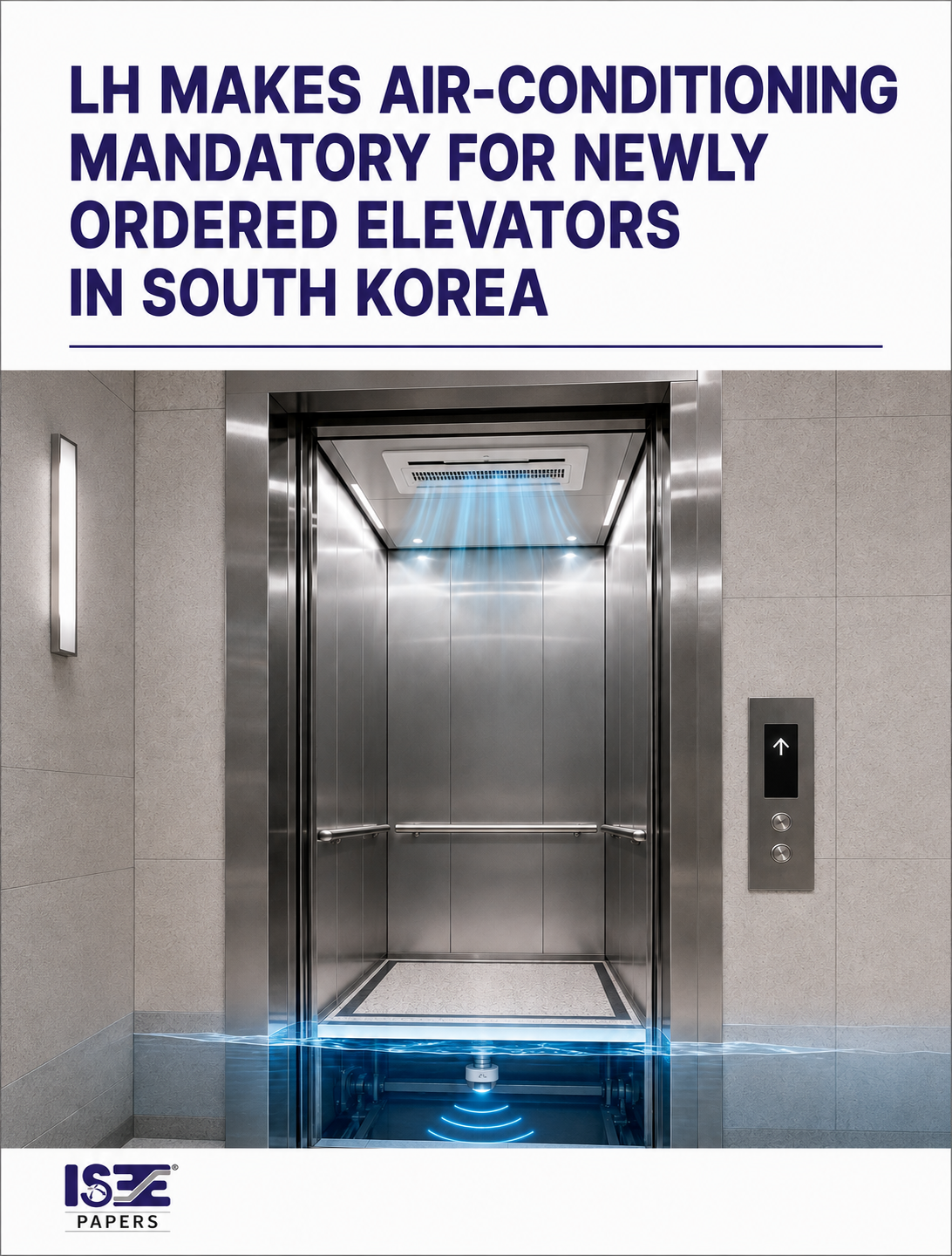
Elevator air-conditioning has previously lacked a dedicated installation standard in LH housing projects. As a result, residents have frequently experienced uncomfortable cabin temperatures during South Korea’s hot summer months.
By incorporating cooling systems into its procurement and design requirements, LH is treating temperature control as a standard component of the passenger environment rather than an optional addition.
The corporation has already made air-conditioning compulsory when replacing elevators in ageing rental housing. It is also considering installing cooling equipment in existing elevators that are not scheduled for replacement, depending on available budgets and site conditions.
Flood detection and automatic safety response
The improvement programme also introduces technology designed to protect passengers and equipment during heavy rainfall and flooding.
Sensors will detect water entering the elevator system or hoistway. When a possible flooding event is identified, the elevator will automatically travel to a designated safe floor before its operation is restricted.
This controlled response is intended to prevent the car from continuing towards affected lower levels and reduce the risks associated with water reaching electrical and mechanical equipment. The measure forms part of LH’s efforts to adapt public housing infrastructure to increasingly severe heatwaves and concentrated rainfall. Yonhap News Agency
Design standards to reflect actual operating conditions
LH will also change the way electrical requirements for elevators are calculated. Conventional designs based mainly on manufacturers’ minimum specifications will be replaced with a method that considers actual operating conditions, including elevator load and speed.
The corporation expects the new approach to optimise building electrical systems, reduce unnecessary power capacity and lower associated construction and maintenance costs. Savings generated through the revised design method are expected to support investments in air-conditioning, flood protection and other elevator improvements.
Faster operation and improved interiors
The programme extends beyond climate control and flood safety. LH plans to raise the speed standard for elevators currently classified as low-speed, reducing passenger waiting and travel times.
Interior elements, including elevator ceilings and floor-position indicators, will also be reviewed as part of a wider effort to improve cabin design and overall quality.
LH President Lee Sunghoon said the initiative is intended to improve an essential residential facility that people use every day and provide residents with a more comfortable and convenient living environment.
Taken together, the measures represent a broader shift in public-housing elevator procurement, with passenger comfort, climate resilience, safety and lifecycle efficiency being incorporated into the design process from the outset.