ISEE Papers

A Digital Knowledge, Authority & Industry Recognition Platform for the Vertical Transportation Ecosystem

ISEE Papers

A Digital Knowledge, Authority & Industry Recognition Platform for the Vertical Transportation Ecosystem

Blog

The Digital Lift: Virtual Maintenance Redefining the Service Grid

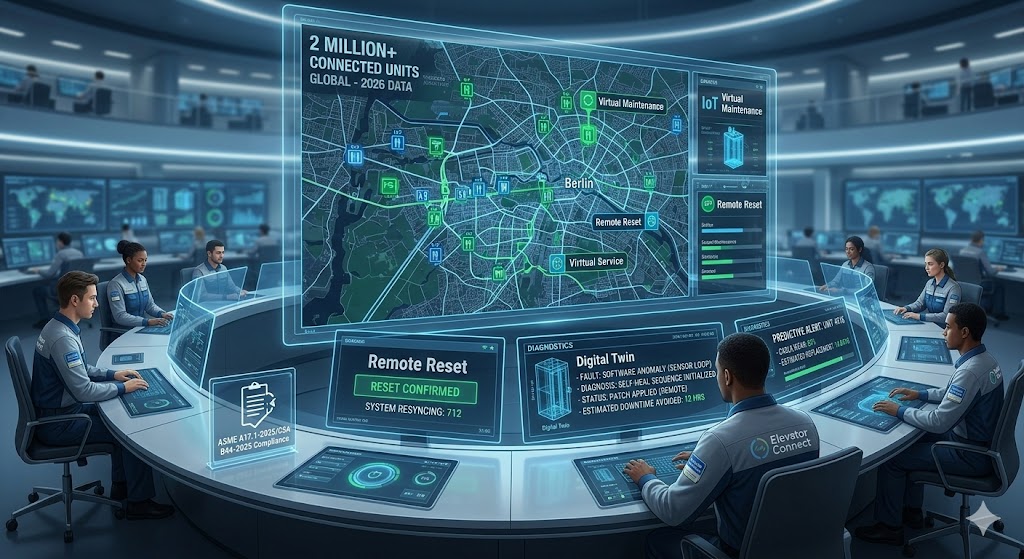
The Digital Lift: Virtual Maintenance Redefining the Service Grid BERLIN, GERMANY — In the first half of 2026, the vertical transportation (VT) industry has officially crossed a digital rubicon. The “technician in the shaft” model—a century-long staple of urban maintenance—is being rapidly supplemented by Cloud-Based Remote Operations. According to recent industry data, over 2 million elevator and escalator units globally are now permanently tethered to IoT ecosystems like Otis MAX and Schindler Ahead. The News: A Global Network of Connected Shaffts The scale of the “Connectivity” shift is staggering. Otis, which currently holds nearly 32% of the remote monitoring market share, has successfully integrated AI-driven diagnostics into its global service portfolio. By 2026, these cloud platforms are no longer just sending “broken” alerts; they are managing the heartbeat of entire city districts. Market Growth: The elevator remote monitoring market has surged, driven by a 2026 push for “Smart City” infrastructure. Global Leaders: Alongside Otis and Schindler, Asian giants like Hitachi and Hyundai Elevator (the latter serving 85% of South Korean installations) have turned elevators into data-generating assets that communicate with building management systems in real-time. Innovation: The Rise of the “Remote Reset” The most transformative “Intelligence” feature of 2026 is the Remote Interaction Operation. Previously, any minor sensor glitch—such as a door obstruction or a brief power surge—required a physical visit from a technician. Now, under the updated ASME A17.1-2025/CSA B44-2025 safety codes, qualified service teams can perform “Remote Resets” and software patches from centralized operations centers. Self-Correction: If an elevator identifies a minor non-safety-critical software loop, it can often initiate a “self-heal” sequence. Downtime Reduction: These virtual interventions have reduced physical call-outs by up to 20%, and in some high-density commercial zones, unscheduled downtime has plummeted by 50%. Software Patches: Just like a smartphone, elevators in 2026 receive over-the-air (OTA) updates to optimize speed profiles and energy usage without a single minute of “out of service” time. The Impact: From Reactive to Predictive The “Modernization” of maintenance is fundamentally changing the economics of building ownership. By shifting from Time-Based Maintenance (checking things because the calendar says so) to Condition-Based Maintenance (checking things because the data shows wear), the industry is extending component lifespans by an estimated 30%. As we move deeper into 2026, the goal is clear: a “Zero-Failure” future. For the millions of daily passengers, this means the most reliable elevator is the one they never have to think about—because the “technician” fixed it from a cloud server three hours before a human ever noticed a problem.
Beyond Touchless: The Era of Proximity-Based Mobility

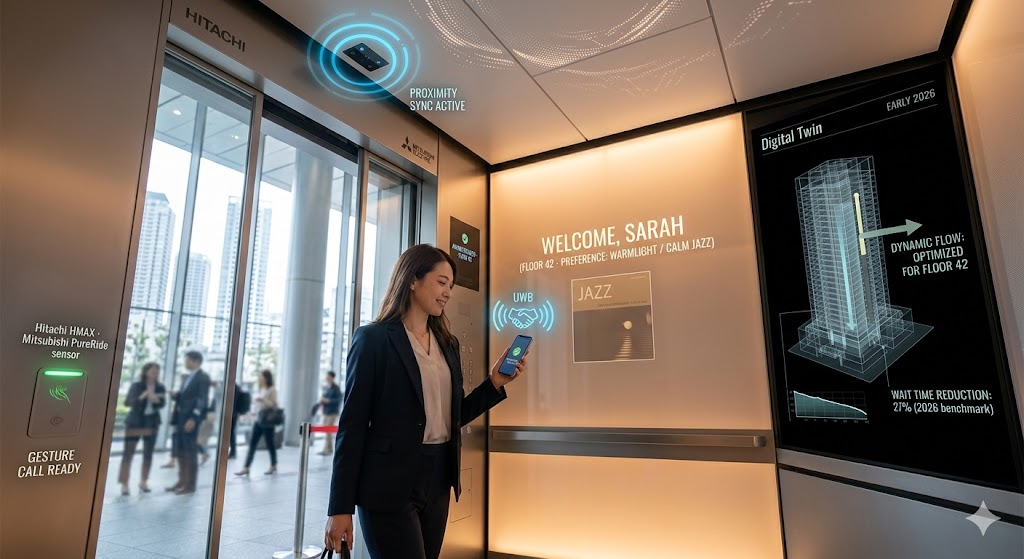
Beyond Touchless: The Era of Proximity-Based Mobility TOKYO, JAPAN — As we move through the first quarter of 2026, the vertical transportation industry is witnessing the transition from “Touchless” to “Intuitive” mobility. Leading Japanese innovators Hitachi and Mitsubishi Electric have unveiled a new generation of elevator systems that effectively “predict” a passenger’s journey before they even reach the elevator bank. The News: From Buttons to Presence While the touchless wave of 2024 focused on IR-sensors and voice, the 2026 standard is built on Proximity-Based Mobility. Using Bluetooth Low Energy (BLE) and Ultra-Wideband (UWB) technology, elevators now communicate directly with a passenger’s smartphone or wearable device. Non-Inductive Calling: As a passenger walks toward the lobby, the building’s security system authenticates their credentials and automatically “calls” the most efficient car for their destination floor. Gesture-Based Refinement: For visitors or those without pre-synced devices, Mitsubishi’s PureRide™ and Hitachi’s latest HMAX suites utilize high-fidelity gesture recognition. A simple upward swipe in the air 10 cm from the sensor registers a call—eliminating the need for any physical contact in high-traffic, noisy lobbies where voice commands often fail. Innovation: The Passenger Experience (PX) Digital Twin The most significant breakthrough in 2026 is the synchronization of these systems with a building’s Digital Twin. By linking vertical movement to the building’s “digital heart,” the elevator experience has become hyper-personalized. Environmental Personalization: When a passenger is identified, the elevator interior—including lighting temperature, digital wall displays, and even background audio—automatically adjusts to their saved preferences. Dynamic Flow Optimization: The Digital Twin analyzes real-time occupancy data. If the system “sees” a large group entering the lobby via security cameras, it preemptively stages multiple cars to handle the surge, reducing wait times by an average of 25% compared to 2024 benchmarks. Impact: Hygiene and Efficiency as One This evolution addresses the two biggest demands of modern urban living: Hygiene and Time. By removing physical touchpoints, buildings are inherently safer from surface-level transmissions. Simultaneously, by making the “call” process invisible and automatic, the industry is moving closer to a “frictionless” office environment where the elevator is no longer a bottleneck, but a seamless extension of the lobby.

Robotics in the Shaft: The Rise of Autonomous Installation

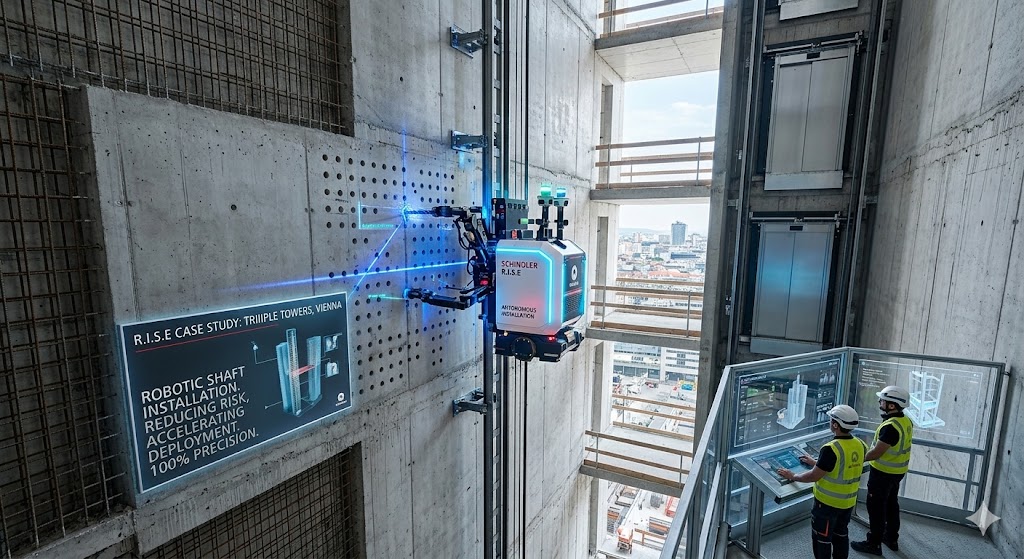
The Rise of “Digitally Native” High-Rises: Vertical Mobility in the AI Era VIENNA, AUSTRIA — In early 2026, the vertical transportation industry reached a significant milestone in “Engineering” and “Safety” with the successful completion of the TrIIIple Towers project. While the skyline addition is impressive, the real news lies in how it was built. Schindler utilized its revolutionary R.I.S.E (Robotic Installation System for Elevators), marking a transition toward fully autonomous construction in high-rise shafts. The Engineering: The Self-Climbing Robot Traditionally, elevator installation is one of the most physically demanding and repetitive jobs in construction, requiring technicians to drill thousands of anchor bolts into concrete while suspended in a dark, narrow shaft. The R.I.S.E system is an autonomous, self-climbing robot that operates independently within the hoistway. Precision Drilling: Using data directly from Building Information Modeling (BIM) files, the robot identifies the exact coordinates for landing doors and divider beams. 24/7 Operation: Unlike human crews, the robot can operate around the clock, significantly accelerating the “Modernization” and “Installation” phases of the project. Safety: Eliminating High-Risk Labor The primary driver behind the adoption of R.I.S.E in 2026 is the enhancement of Safety. By delegating the high-decibel, high-vibration task of concrete drilling to a machine, the industry is seeing: Reduced Injury Rates: Technicians are moved from the high-risk “inside-shaft” environment to supervisory roles in a safe control room. Quality Consistency: Human error in bolt placement—which can lead to ride quality issues or expensive rework—is virtually eliminated. The Impact: A Global Deployment Following the success in Vienna, major developers in Riyadh and Mumbai have begun mandating robotic installation for all projects over 200 meters. For the VT industry, this represents a shift toward Mobility-as-a-Service that begins before the building is even open. By integrating robotics with digital twins, the “Engineering” of 2026 is no longer just about the car in the shaft, but the intelligent systems that put it there.

Seoul Station North Area Development

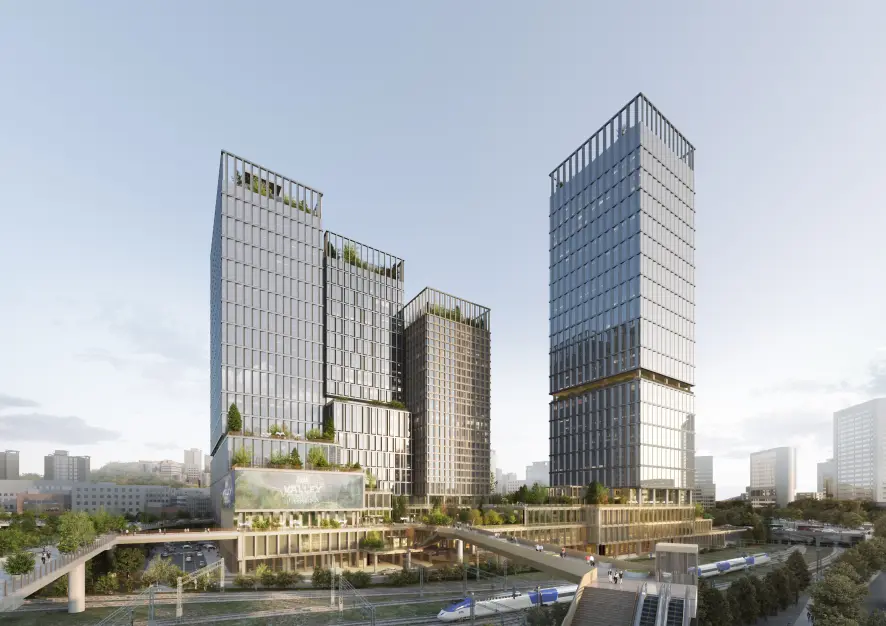
Vertical Efficiency: Seoul Station Redefining Urban Density Image Credit: Hanwha Corporation E&C Division via TK Elevator SEOUL, SOUTH KOREA — As the massive Seoul Station North Area Complex Development breaks ground, the project has become a global case study for “Optimization” and “Engineering” in the ultra-dense urban landscape of 2026. The Hanwha-led consortium has tapped TK Elevator (TKE) to provide a comprehensive vertical transportation suite of 103 units, featuring a flagship installation of 13 TWIN systems. The Engineering: Two Cars, One Shaft, Zero Compromise The crown jewel of the development is the implementation of the TWIN elevator system. Unlike conventional elevators that require a dedicated shaft for every car, the TWIN system operates two independent cabins—one on top of the other—within a single hoistway. Each car is equipped with its own traction drive, controller, and safety gear, sharing only the guide rails and landing doors. This engineering feat allows the cars to move independently, managed by an intelligent Destination Selection Control (DSC) system that maintains a “virtual safety zone” between the two cabins at all times. Optimization: Reclaiming the Building Core For the Seoul Station project—a transit-oriented development (TOD) connecting KTX, metro, and future GTX-A lines—maximizing leasable space was a non-negotiable requirement. Footprint Reduction: By utilizing TWIN technology, the project has successfully reduced the building’s central core footprint by 30%. Increased Capacity: Despite using fewer shafts, the dual-car configuration allows for a 40% increase in passenger handling capacity, essential for a hub expected to manage millions of commuters. Leasable Revenue: For developers, the space saved from redundant elevator shafts translates directly into premium office and residential square footage, significantly increasing the project’s Return on Investment (ROI). The Impact: A Landmark in Modernization Slated for completion as part of Seoul’s broader urban transformation, this project marks TKE’s 11th major TWIN deployment in Korea. It serves as a definitive case study for 2026: as cities grow tighter and buildings taller, the “Optimization” of vertical space is no longer just a technical choice—it is a financial and architectural necessity. By proving that a “Digitally Native” high-rise can move more people with less infrastructure, the Seoul Station North Area development is setting the standard for the next generation of global megacities.

The New Standard: Elevators as Power Plants

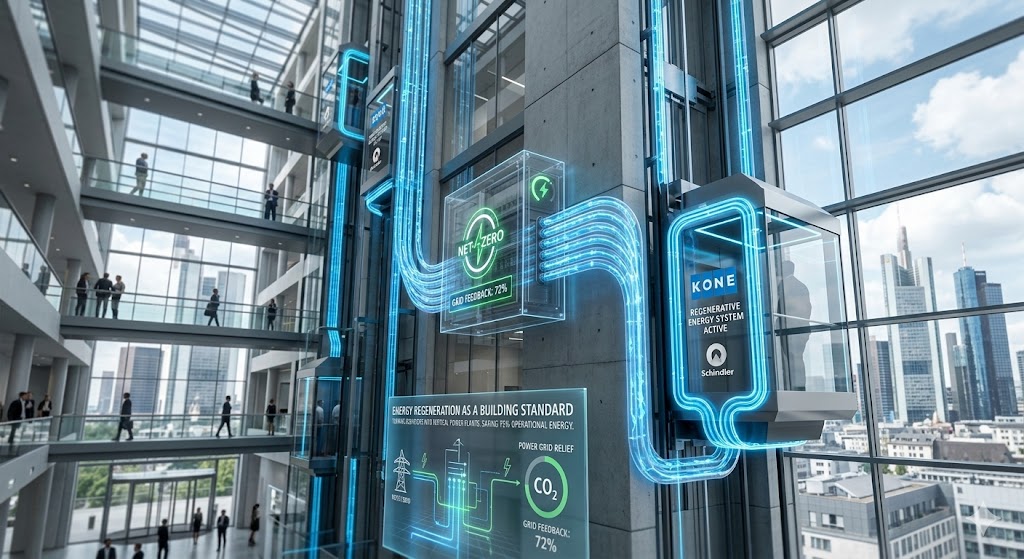
The New Standard: Elevators as Power Plants FRANKFURT, GERMANY — In a landmark shift for urban architecture, Energy Regeneration has officially moved from a “green luxury” to a mandatory engineering standard for high-rise developments in 2026. Global leaders like Schindler and KONE have integrated regenerative drive technology into 100% of their new high-speed product lines, effectively turning every elevator shaft into a vertical power plant. The Engineering: Capturing “Wasted” Motion At the heart of this Sustainability breakthrough is the Regenerative Drive. Traditional elevators dissipate energy as heat through resistors during two specific phases: when a heavily loaded car travels down, or when an empty car travels up. By 2026, engineering advancements have perfected the ability to capture this kinetic energy and convert it back into clean electricity. “We are no longer just looking for efficiency; we are looking for net-positive contributions,” says a Lead Engineer at KONE. “Our latest systems return up to 75% of the energy used during a cycle directly back into the building’s internal microgrid.” Sustainability: The Path to Net-Zero With urban centers aiming for aggressive carbon neutrality targets, the VT industry’s shift to energy regeneration is a critical piece of the puzzle. This technology is now a primary requirement for achieving LEED Platinum and BREEAM Outstanding ratings. Grid Relief: By feeding power back into the building, elevators reduce the peak load on city electrical grids. Heat Reduction: Because these systems don’t “burn off” energy as heat, the demand on building cooling systems (HVAC) is reduced by an average of 15% in the elevator machine area. Operational Savings: For a 50-story commercial tower, these engineering gains translate to thousands of dollars in annual utility savings. The Impact: A Decarbonized Sky The standardizing of these drives marks a pivotal moment in Engineering. By treating the elevator as a dynamic part of the building’s energy ecosystem rather than a drain, the industry is proving that vertical density can coexist with environmental stewardship. As we move further into 2026, the question is no longer if a building will regenerate its energy, but how much power it will contribute back to the city.

The Rise of “Digitally Native” High-Rises: Vertical Mobility in the AI Era​

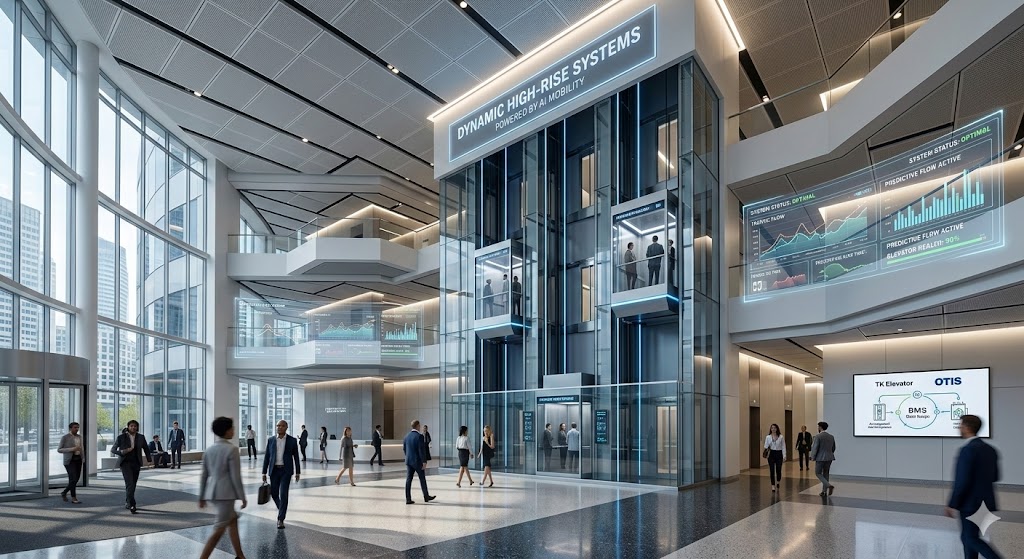
The Rise of “Digitally Native” High-Rises: Vertical Mobility in the AI Era CANNES, FRANCE — As the global real estate community gathers for the MIPIM 2026 conference, the conversation has shifted from the height of skyscrapers to their “intelligence.” Leading vertical transportation (VT) giants, notably TK Elevator (TKE) and Otis, have officially declared the end of the standalone elevator. In its place, they have introduced “digitally native” mobility platforms that treat every elevator car as a high-functioning IoT node within a building’s nervous system. From “Up and Down” to “Search and Predict” Historically, elevators operated on a reactive basis: a passenger pressed a button, and the system responded. The 2026 shift to digital-first platforms—such as TKE’s newly expanded Dynamic High-Rise framework and the Otis Gen3 series—changes this paradigm. These systems are now “digitally native,” meaning they are designed with cloud connectivity and AI processing at their core rather than as an add-on. By syncing directly with a Building Management System (BMS) via open APIs, elevators no longer work in a vacuum. They “know” the building’s schedule. “We are no longer just moving people; we are managing the pulse of the building,” says a TKE spokesperson at the MIPIM pavilion. “Through our dynamic dispatcher algorithms, the system anticipates a 9:00 AM lobby surge because it’s synced with the office check-in data and calendar events.” The News: AI-Supported Traffic Frameworks The centerpiece of this technological leap is the integration of AI-supported frameworks. These frameworks use machine learning (specifically Long Short-Term Memory networks) to analyze historical traffic patterns and real-time inputs. Predictive Dispatching: Instead of waiting for a call, the AI “stages” cars on specific floors based on predicted demand, virtually eliminating wait times during peak hours. BMS Synergy: In mixed-use developments, the elevator system can communicate with HVAC and lighting systems. If the AI detects a large group heading to the 40th-floor conference room, it can signal the BMS to pre-cool the space. Cyber-Resilience: With connectivity comes risk. The latest 2026 models are built to IEC 62443 standards, ensuring that the “digital fabric” of the lift is as secure as a bank’s server. The Impact: Slashing Downtime by 30% For building owners, the most significant “bottom-line” news is the drastic reduction in operational friction. By mid-2026, industry data suggests that these IoT-enabled systems will reduce equipment downtime by over 30%. Feature Impact on Operations Predictive Maintenance Identifies component wear (e.g., door rollers) before failure occurs. Real-Time Health Monitoring Allows for remote “intervention,” fixing software glitches without a technician visit. Energy Regeneration Captures heat energy during braking and returns it to the building grid. This shift toward “proactive” management means that the sudden “Out of Service” sign may soon become a relic of the past. As elevators become intelligent nodes, they are extending the lifecycle of the machinery by up to 25%, making the “digitally native” high-rise the new gold standard for urban developers.

Scroll to top