



Engineering a Giant: Inside Mumbai’s Record-Breaking Passenger Elevator
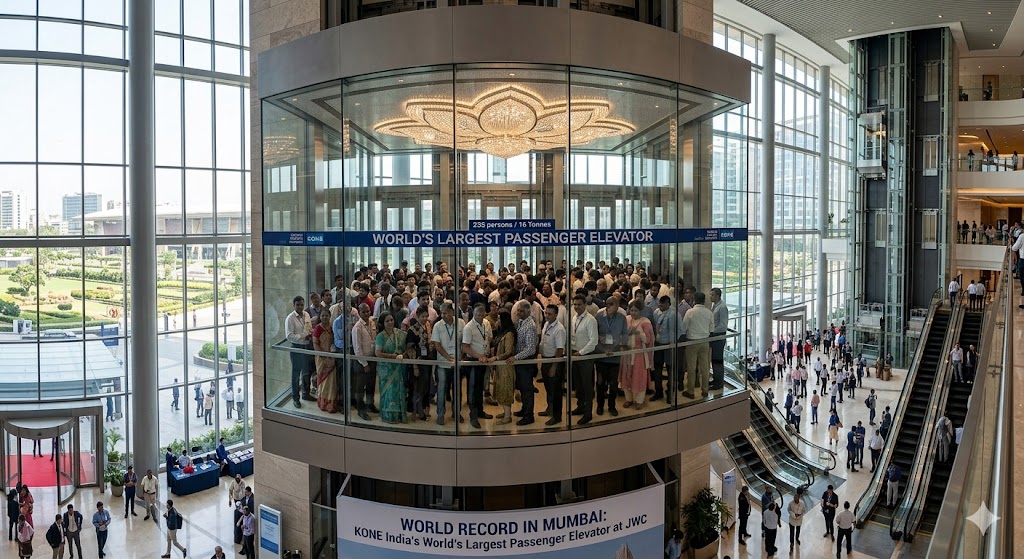
Industry Report | Engineering Marvels Engineering a Giant: Inside Mumbai’s Record-Breaking Passenger Elevator Located in the heart of the Bandra Kurla Complex (BKC) at the Jio World Centre (JWC), Mumbai now hosts a legitimate engineering marvel: the world’s largest passenger elevator. Developed by KONE India, this massive installation is designed to manage the immense footfall of one of India’s premier business and cultural hubs. — Advertisement — 1. Technical Specifications: A Room That Moves The elevator is less of a traditional lift and more of a mobile room. Its scale and power are unprecedented in the vertical transportation industry, pushing the boundaries of what is possible in high-density mobility. Capacity: It is officially rated to carry 235 passengers at once. Floor Space: The cabin spans 25.78 square meters, which is roughly the size of a studio apartment in Mumbai. Weight & Stops: The unit weighs 16 tonnes and services 5 stops at a speed of 1.0 meter per second. Hoisting Power: To move such a massive load, it utilizes the heavy-duty KONE EcoDisk® MX100 machine. — Advertisement — 2. Advanced Engineering & Safety Moving over 200 people safely requires more than just a larger motor; it requires a complete rethink of structural integrity and real-time monitoring systems. Did You Know? The entire structural shaft of this elevator moves on rails fixed over heavy-duty steel columns, supported by 18 pulleys and 9 ropes to ensure absolute stability. The Support System: It uses a specialized pulley beam system to ensure precise balance. Real-time Monitoring: Integrated with KONE E-Link™, allowing the operations team to monitor health and performance remotely. 3. Design: Where Art Meets Mobility Since the Jio World Centre is a landmark for luxury, the elevator was designed as a “scenic” centerpiece. It features all-round glass walls, offering passengers panoramic views of the convention center’s gardens. — Advertisement — Summary of the “Mumbai Giant” Feature Detail Manufacturer KONE Elevators India Location Jio World Centre, BKC, Mumbai Max Capacity 235 Persons / 16 Tonnes Area 25.78 sq. meters Tech Focus KONE E-Link & EcoDisk MX100 This installation serves as a critical component of the JWC’s infrastructure, which includes a total of 188 KONE installations to ensure seamless “People Flow” during massive global exhibitions and events. Sources: The information in the article is primarily sourced from official communications and technical reports released by KONE Elevators India, the company that designed and installed the unit. Core Primary Sources Official Unveiling: KONE India formally announced the record-breaking elevator at the Jio World Centre in May 2022. Press Meet & Media Tours: Ongoing industry coverage and specific media interactions—including a major tour as recently as late 2025—provided the verified technical specifications regarding its 235-person capacity and 16-tonne weight. Industry Exhibitions: The project was a centerpiece for KONE during the IDAC Expo and other vertical transportation forums, where its “People Flow” analysis and energy-efficient systems (like the EcoDisk® MX100) were detailed for architectural and engineering audiences.
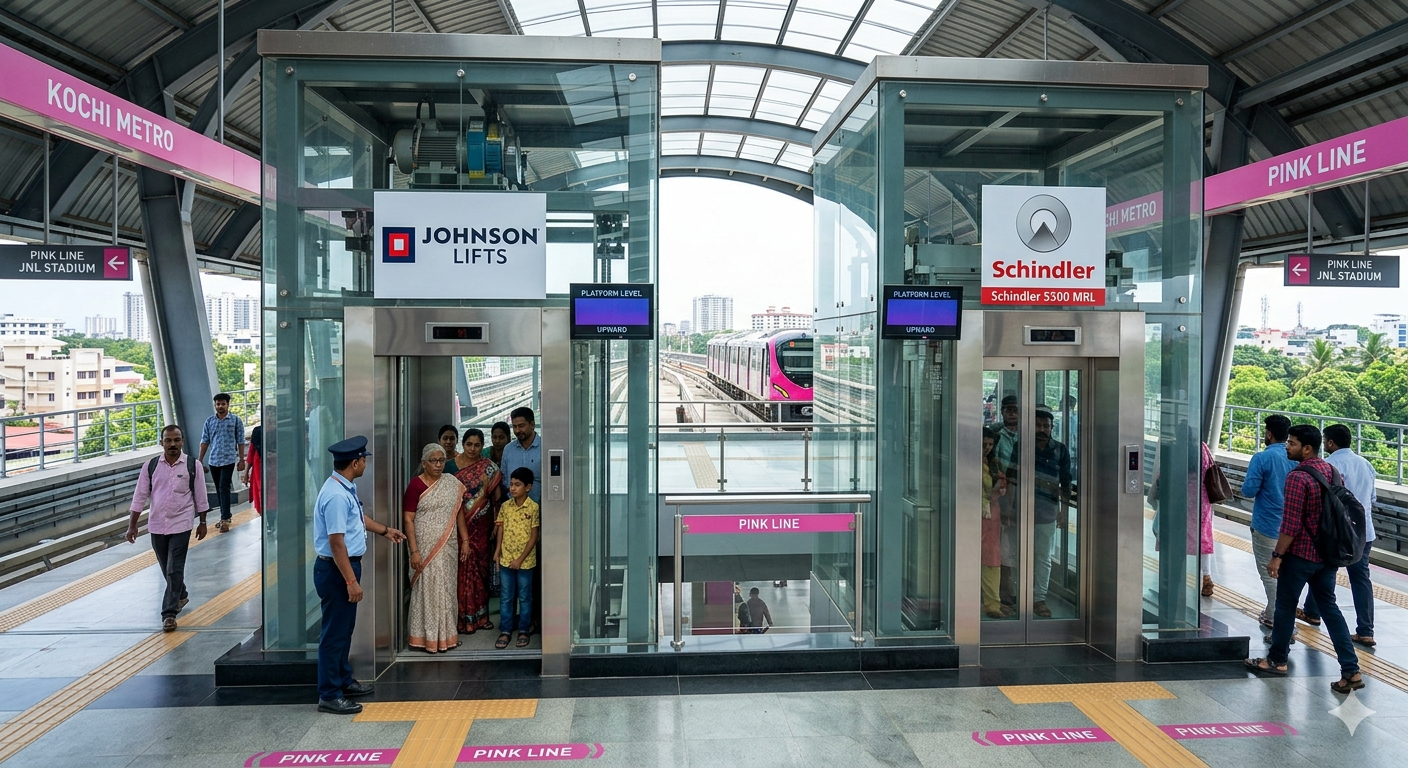
Kochi Metro Phase 2: Johnson Lifts and Schindler India Secure “Pink Line” Vertical Mobility Contracts
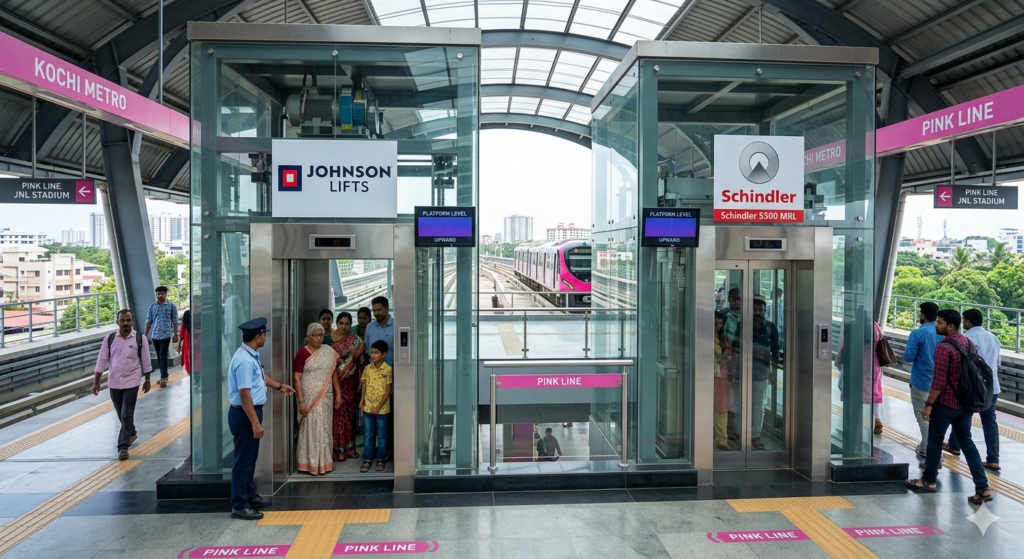
Kochi Metro Phase 2: Johnson Lifts and Schindler India Secure “Pink Line” Vertical Mobility Contracts Kochi Metro Phase 2: Johnson Lifts and Schindler India Secure “Pink Line” Vertical Mobility Contracts KOCHI, APRIL 2026 In a significant milestone for the city’s expanding transit network, Kochi Metro Rail Limited (KMRL) has finalized Johnson Lifts and Schindler India as the lowest bidders (L1) to supply and install heavy-duty Machine-Room-Less (MRL) elevators for the highly anticipated Phase 2 “Pink Line.” The contracts, which cover the 11.2-kilometer stretch connecting Jawaharlal Nehru Stadium to Infopark via Kakkanad, mark a strategic shift toward energy-efficient, space-saving vertical transportation in India’s rapid transit sector. Advertisement Ad Space 1, 728 x 90 Leaderboard The Move to Machine-Room-Less (MRL) Technology Unlike traditional elevators, MRL systems house the traction machine and controller within the hoistway itself, eliminating the need for a bulky penthouse machine room on the roof of metro stations. This design is critical for the Pink Line’s elevated stations, where aesthetic integration and urban footprint are top priorities. Energy Efficiency: The units will feature Permanent Magnet Gearless (PMG) motors and Regenerative Drives, which can feed power back into the station’s electrical grid during descent, reducing energy consumption by up to 30%. Heavy-Duty Performance: Built to withstand the high-frequency traffic of a metro environment, these lifts are designed for 24/7 operation with a focus on rapid leveling and passenger safety. Advertisement Ad Space 2, 300 x 250 Medium Rectangle A Split Win for Industry Giants The selection reflects a balanced approach by KMRL, leveraging both domestic manufacturing prowess and global technological standards: Johnson Lifts: As the home-grown market leader, Johnson Lifts continues its “Make in India” success story. Their local manufacturing capability ensures rapid deployment and a robust service network across Kerala. Schindler India: Bringing its global expertise in transit mobility, Schindler’s involvement ensures the integration of advanced IoT monitoring. These units will likely be linked to digital platforms for real-time health tracking to prevent downtime. Advertisement Ad Space 3, Sponsored Banner / Native Ad Building the Pink Line Future The “Pink Line” is expected to transform the commute for Kochi’s IT corridor. With the vertical transportation contracts now awarded, focus shifts to the installation phase, which is scheduled to align with the station structural completions in late 2026. “The objective is seamless multi-modal connectivity,” stated a KMRL technical consultant. “By opting for high-spec MRL units, we are ensuring that the elderly, differently-abled, and daily commuters experience zero friction in their transit journey.” Advertisement Ad Space 4, 728 x 90 Footer Banner Article Source This article is published for informational and editorial purposes only. Views expressed may not reflect those of ISEE Papers. We do not guarantee accuracy or completeness. For full details, please read our complete disclaimer here: https://iseepapers.com/isee-papers-website-disclaimer/
Schindler CEO Vows to Fight Potential Kone-TK Elevator Merger, Warning of Industry “Bloodbath”
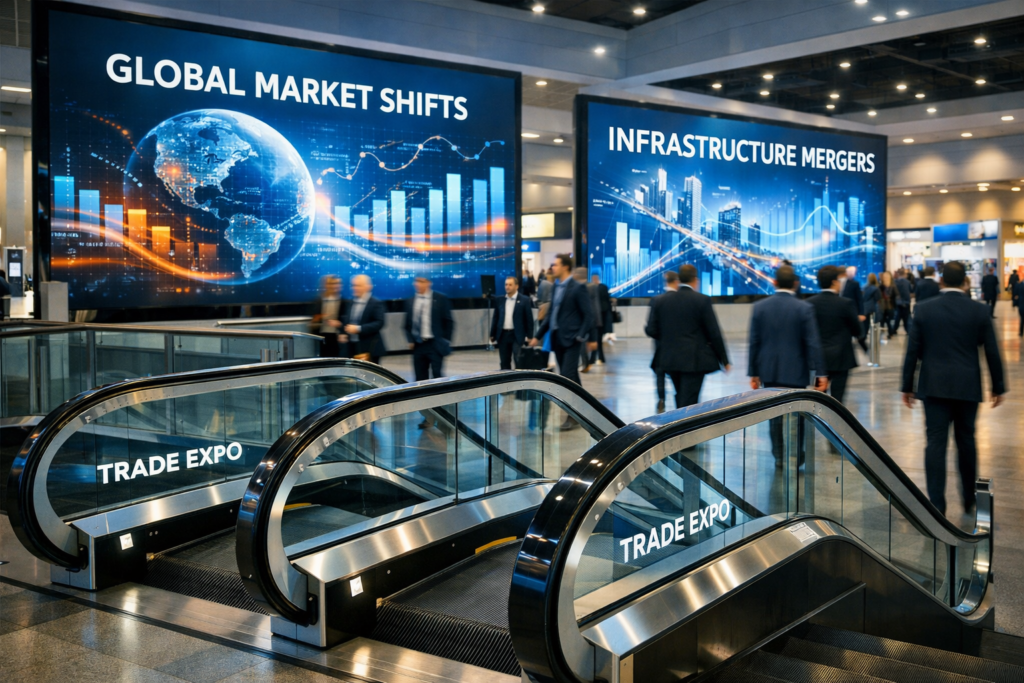
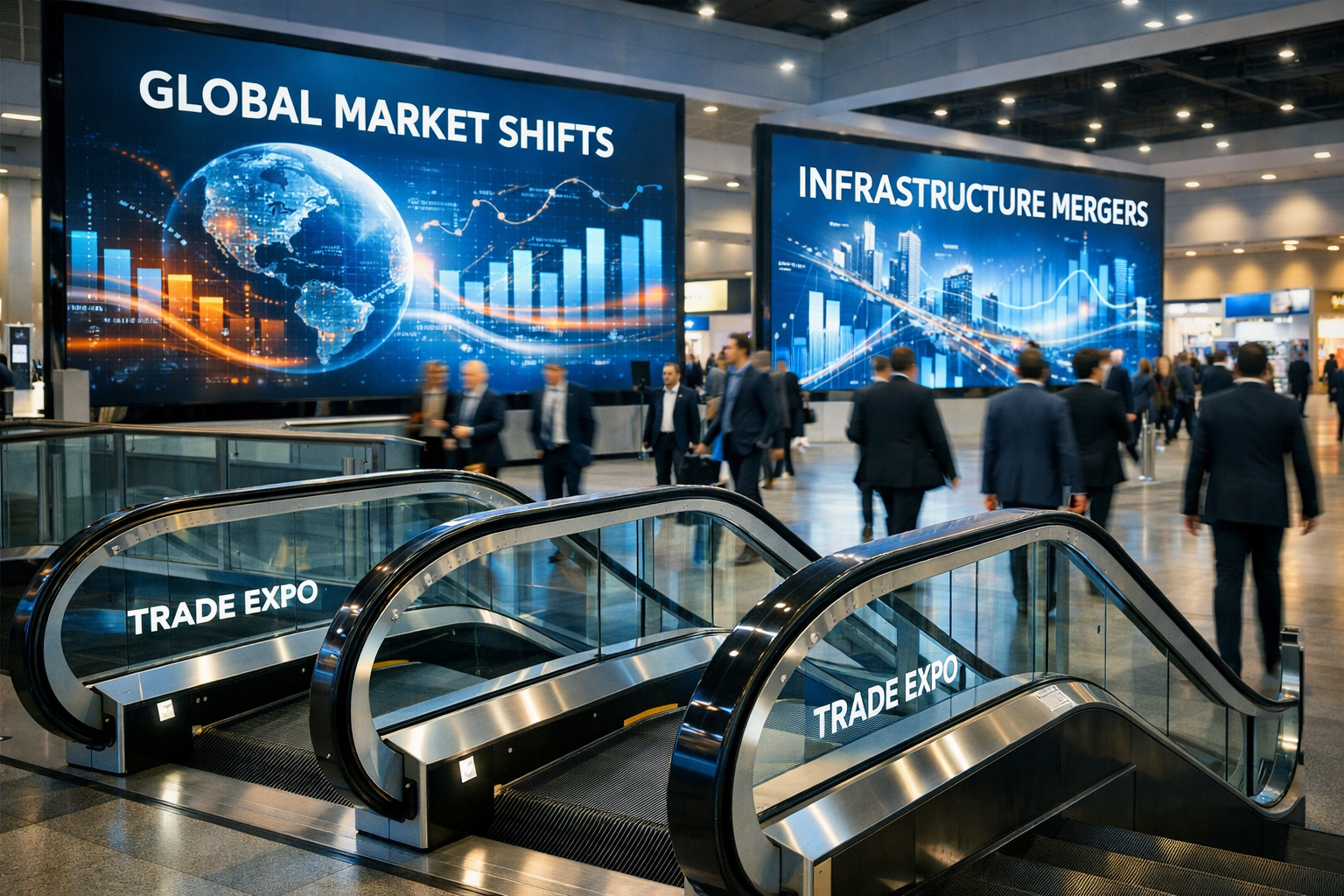
Schindler CEO Vows to Fight Potential Kone-TK Elevator Merger, Warning of Industry “Bloodbath” Schindler Signals Antitrust Fight Over Potential Kone-TK Elevator Merger The global elevator and escalator industry may be heading into one of its most consequential regulatory battles yet. The global elevator and escalator industry is bracing for a significant legal and regulatory battle. Paolo Compagna, CEO of Swiss manufacturer Schindler, has publicly declared that the company is prepared to challenge a potential merger between its primary rivals, Kone and TK Elevator (TKE), before international antitrust authorities. Advertisement Space 728 x 90 Banner Ad A Mega-Merger in the Works The tension follows reports that Finland-based Kone is in active negotiations to acquire TK Elevator from its private equity owners, Advent International and Cinven. If successful, the deal, rumored to be valued at up to €25 billion ($28.7 billion), would create a new global leader in the industry. The merged entity would leapfrog both current market leader Otis and second-largest manufacturer Schindler to claim the top spot globally. Advertisement Space Responsive Mid-Article Ad Block “A Bloodbath” for the Industry In a blunt assessment of the potential deal, Compagna described the merger as a “bloodbath” that would inevitably disrupt the sector. He argued that merging the world’s third and fourth-largest lift manufacturers would create a logistical and operational nightmare. According to Compagna, the major challenges would include: Overlapping Customer Bases: Serving the same clients in multiple regions. Redundant Production Sites: Integrating manufacturing facilities across the globe. Workforce Consolidation: Managing the merging of massive, overlapping teams. Compagna further emphasized that Schindler would not be the only party questioning the legality of such a move. He stated that antitrust scrutiny would likely be pursued in every possible country where the merger could raise competition concerns. Echoes of 2019 This is not the first time a merger between these two giants has been proposed. In 2019, Kone led a consortium bid for TKE but was eventually outbid by Advent and Cinven for €17.2 billion. Compagna noted that Schindler’s opposition remains as firm today as it was then, adding that the current economic environment is even more challenging than it was five years ago. Advertisement Space 970 x 250 Leaderboard Ad Potential Divestitures and Strategy Industry analysts predict that for any such merger to receive regulatory approval, the companies would likely be forced to sell off significant portions of their business to prevent monopoly concerns. Interestingly, Schindler appears ready to capitalize on this possibility. Compagna indicated that if the merger progresses to the point of forced sell-offs, Schindler would consider acquiring those divested businesses as part of its own bolt-on acquisition strategy. Market Impact As of late March 2026, TK Elevator’s owners are reportedly pursuing a dual-track strategy: continuing negotiations for a sale to Kone while simultaneously preparing for a potential initial public offering (IPO). While Kone and TKE have declined to comment on the rumors, the industry remains on high alert as the possibility of a massive realignment of the global market continues to loom. Advertisement Space Bottom Article Ad Placeholder > This article is published for informational and editorial purposes only. Views expressed may not reflect those of ISEE Papers. We do not guarantee accuracy or completeness. For full details, please read our complete disclaimer here: https://iseepapers.com/isee-papers-website-disclaimer/ Advertisement
The New Standard: Elevators as Power Plants
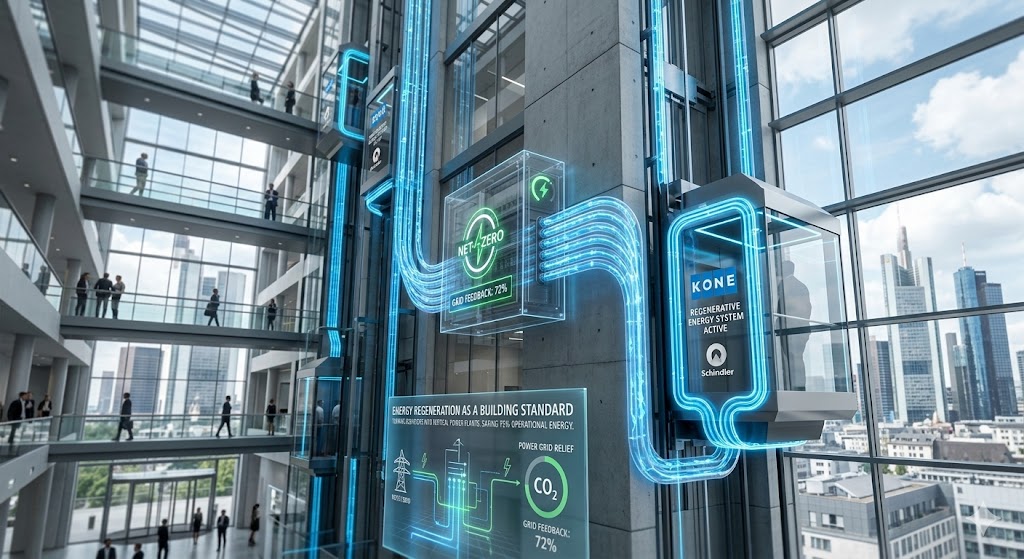
The New Standard: Elevators as Power Plants FRANKFURT, GERMANY — In a landmark shift for urban architecture, Energy Regeneration has officially moved from a “green luxury” to a mandatory engineering standard for high-rise developments in 2026. Global leaders like Schindler and KONE have integrated regenerative drive technology into 100% of their new high-speed product lines, effectively turning every elevator shaft into a vertical power plant. The Engineering: Capturing “Wasted” Motion At the heart of this Sustainability breakthrough is the Regenerative Drive. Traditional elevators dissipate energy as heat through resistors during two specific phases: when a heavily loaded car travels down, or when an empty car travels up. By 2026, engineering advancements have perfected the ability to capture this kinetic energy and convert it back into clean electricity. “We are no longer just looking for efficiency; we are looking for net-positive contributions,” says a Lead Engineer at KONE. “Our latest systems return up to 75% of the energy used during a cycle directly back into the building’s internal microgrid.” Sustainability: The Path to Net-Zero With urban centers aiming for aggressive carbon neutrality targets, the VT industry’s shift to energy regeneration is a critical piece of the puzzle. This technology is now a primary requirement for achieving LEED Platinum and BREEAM Outstanding ratings. Grid Relief: By feeding power back into the building, elevators reduce the peak load on city electrical grids. Heat Reduction: Because these systems don’t “burn off” energy as heat, the demand on building cooling systems (HVAC) is reduced by an average of 15% in the elevator machine area. Operational Savings: For a 50-story commercial tower, these engineering gains translate to thousands of dollars in annual utility savings. The Impact: A Decarbonized Sky The standardizing of these drives marks a pivotal moment in Engineering. By treating the elevator as a dynamic part of the building’s energy ecosystem rather than a drain, the industry is proving that vertical density can coexist with environmental stewardship. As we move further into 2026, the question is no longer if a building will regenerate its energy, but how much power it will contribute back to the city. This article is published for informational and editorial purposes only. Views expressed may not reflect those of ISEE Papers. We do not guarantee accuracy or completeness. For full details, please read our complete disclaimer here: https://iseepapers.com/isee-papers-website-disclaimer/