Vertical Efficiency: Seoul Station Redefining Urban Density
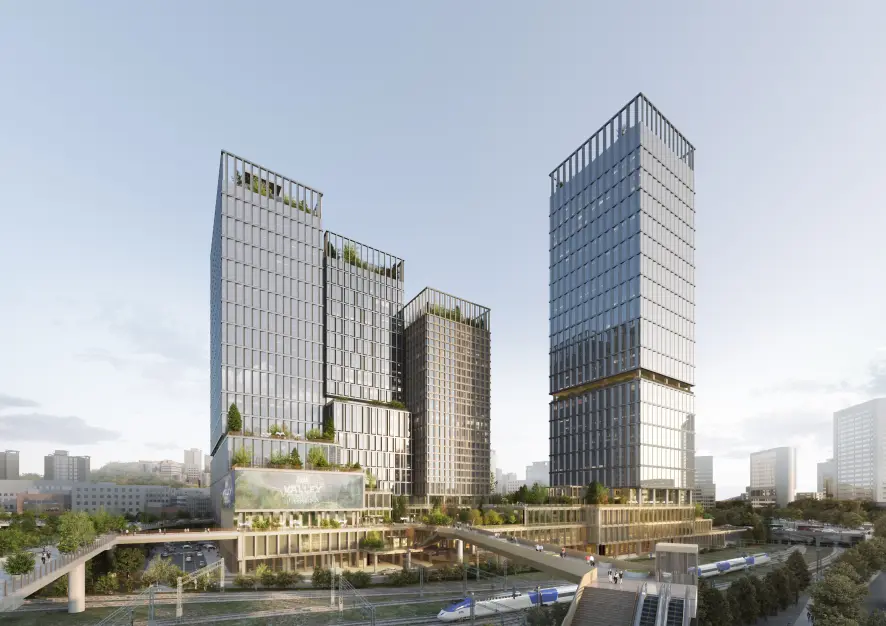
Image Credit: Hanwha Corporation E&C Division via TK Elevator
SEOUL, SOUTH KOREA — As the massive Seoul Station North Area Complex Development breaks ground, the project has become a global case study for “Optimization” and “Engineering” in the ultra-dense urban landscape of 2026. The Hanwha-led consortium has tapped TK Elevator (TKE) to provide a comprehensive vertical transportation suite of 103 units, featuring a flagship installation of 13 TWIN systems.
The Engineering: Two Cars, One Shaft, Zero Compromise
The crown jewel of the development is the implementation of the TWIN elevator system. Unlike conventional elevators that require a dedicated shaft for every car, the TWIN system operates two independent cabins—one on top of the other—within a single hoistway.
Each car is equipped with its own traction drive, controller, and safety gear, sharing only the guide rails and landing doors. This engineering feat allows the cars to move independently, managed by an intelligent Destination Selection Control (DSC) system that maintains a “virtual safety zone” between the two cabins at all times.
Optimization: Reclaiming the Building Core
For the Seoul Station project—a transit-oriented development (TOD) connecting KTX, metro, and future GTX-A lines—maximizing leasable space was a non-negotiable requirement.
Footprint Reduction: By utilizing TWIN technology, the project has successfully reduced the building’s central core footprint by 30%.
Increased Capacity: Despite using fewer shafts, the dual-car configuration allows for a 40% increase in passenger handling capacity, essential for a hub expected to manage millions of commuters.
Leasable Revenue: For developers, the space saved from redundant elevator shafts translates directly into premium office and residential square footage, significantly increasing the project’s Return on Investment (ROI).
The Impact: A Landmark in Modernization
Slated for completion as part of Seoul’s broader urban transformation, this project marks TKE’s 11th major TWIN deployment in Korea. It serves as a definitive case study for 2026: as cities grow tighter and buildings taller, the “Optimization” of vertical space is no longer just a technical choice—it is a financial and architectural necessity.
By proving that a “Digitally Native” high-rise can move more people with less infrastructure, the Seoul Station North Area development is setting the standard for the next generation of global megacities.