



The "Net-Zero" Elevator
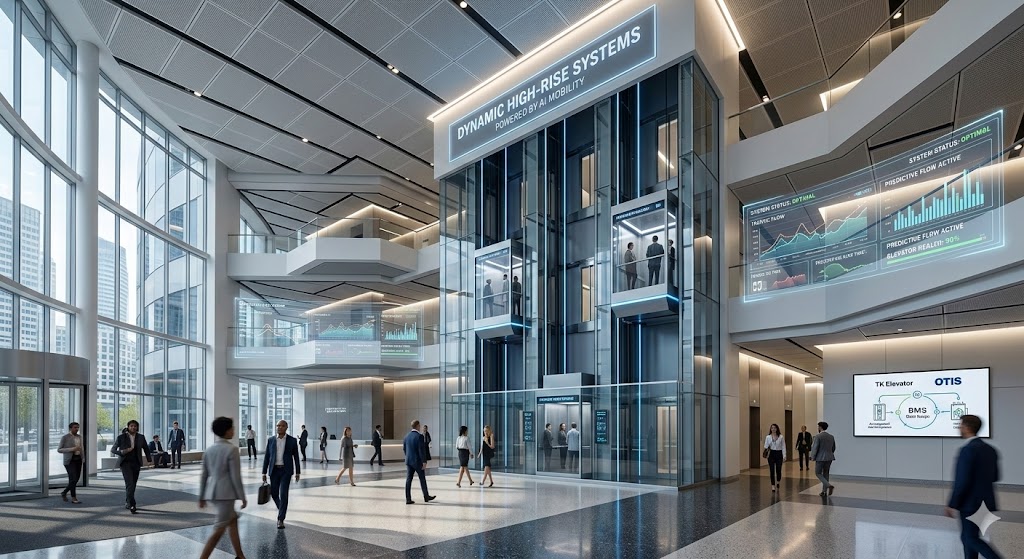
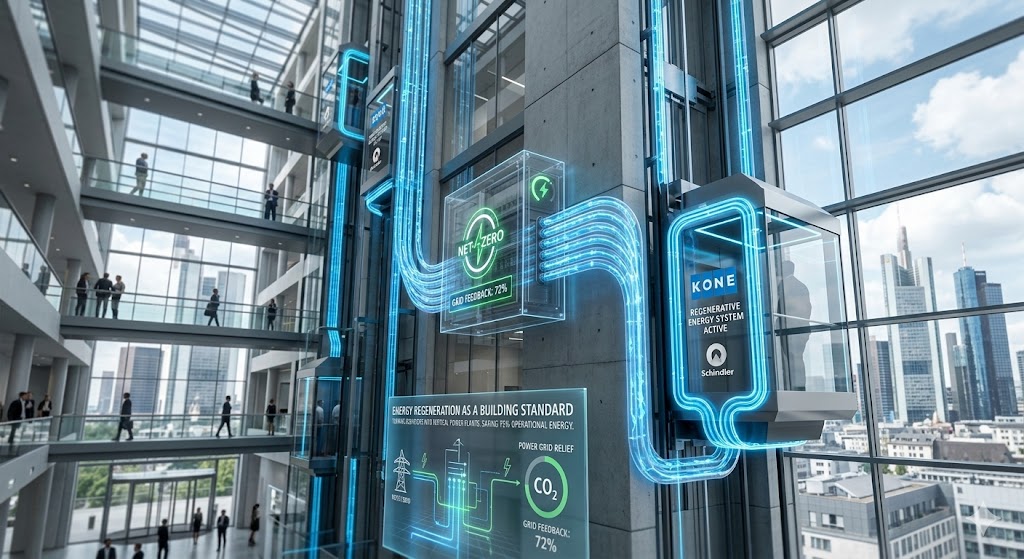
The concept of the Net-Zero Elevator marks a shift from vertical transportation being a “power drain” to becoming a “power plant.” In modern green buildings, elevators can account for 2% to 10% of total energy consumption. Achieving “Net-Zero” in this sector involves a combination of energy generation, ultra-efficient hardware, and AI-driven idle management.
1. Core Technology: The Regenerative Drive
The cornerstone of a Net-Zero system is the Regenerative Drive. Traditional elevators use resistors to dissipate energy as heat when the motor acts as a brake. A regenerative system captures this mechanical energy and converts it into electricity.
-
How it Works: Energy is generated in two scenarios:
-
When a heavily loaded car travels down (gravity does the work).
-
When an empty or lightly loaded car travels up (the counterweight pulls it up).
-
-
Efficiency Gain: These drives can recover up to 30% to 40% of the energy used by the elevator, feeding it back into the building’s electrical grid to power lights, HVAC, or other machinery.
2. Eliminating the “Vampire Draw”: Standby Efficiency
Elevators spend approximately 80% of their lifespan in standby mode. Even when not moving, they consume power for lighting, fans, displays, and controllers.
-
Sleep Mode: Modern systems use “deep sleep” protocols that deactivate non-essential electronics when the lift is idle for more than 5 minutes.
-
LED Transition: Replacing traditional incandescent or halogen cab lighting with motion-sensor LEDs reduces cab energy use by 50% to 75%.
-
Smart Dispatching: AI algorithms (Destination Control Systems) group passengers going to the same floor, reducing the total number of “starts” and “stops,” which are the most energy-intensive parts of a trip.
3. Hardware Innovations: Weight & Friction
Reducing the physical energy required to move the cab is essential for reaching net-zero goals.
-
Carbon Fiber Hoisting: Conventional steel cables are heavy. Switching to carbon fiber tapes (like Otis Compass or KONE UltraRope) reduces the moving mass by up to 90% in high-rise buildings, drastically lowering the torque required from the motor.
-
Permanent Magnet Motors: Gearless motors using permanent magnets are roughly 25% more efficient than traditional induction motors and require no oil, reducing environmental waste.
4. Integration with Building Renewables
A “Net-Zero” elevator is rarely a closed loop; it is part of a Smart Grid ecosystem.
-
Solar Integration: In B2C residential settings, elevators are being paired with rooftop solar arrays and lithium-ion battery buffers. The batteries store solar power during the day and regenerative energy during travel, allowing the elevator to run entirely “off-grid” during peak hours or power outages.
-
Microgrids: By 2026, the trend is moving toward Building Management Systems (BMS) that treat the elevator as a flexible load, slowing down travel speeds slightly during peak grid demand to balance the building’s total energy footprint.
5. Summary of Net-Zero Impact
| Feature | Energy Impact | Sustainable Benefit |
| Regenerative Drive | +30% to 40% recovery | Feeds the building grid |
| LED & Sleep Mode | -80% standby power | Reduces “Vampire” load |
| Carbon Fiber Ropes | -15% operational power | Reduces structural load |
| AI Dispatching | -20% trip frequency | Extends equipment life |
Conclusion
Sustainability in the VT industry is no longer just about using less electricity; it is about energy harvesting. The Net-Zero Elevator is achievable today by combining regenerative hardware with AI-managed software, ultimately turning every vertical trip into a contribution to the building’s carbon-neutral goals.
This article is published for informational and editorial purposes only. Views expressed may not reflect those of ISEE Papers. We do not guarantee accuracy or completeness. For full details, please read our complete disclaimer here: https://iseepapers.com/isee-papers-website-disclaimer/