






Elevators and escalators are becoming an increasingly important part of building design as cities expand vertically and developments grow more complex. No longer viewed solely as transportation equipment, modern vertical mobility systems are being integrated with energy management, building automation, passenger-flow planning and safety infrastructure.
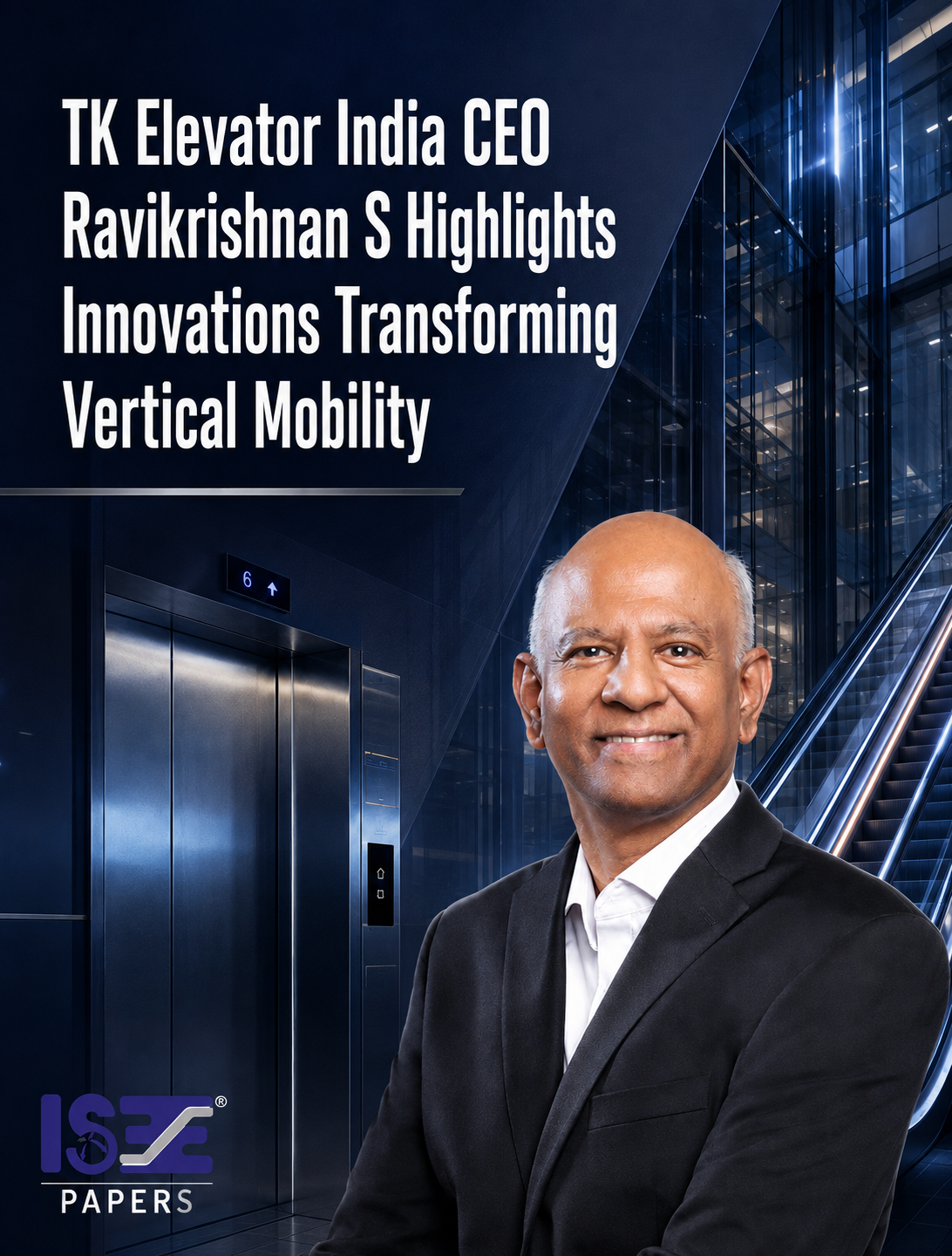
Ravikrishnan S, CEO of TK Elevator India, has highlighted several technologies driving this transition, including regenerative drives, Internet of Things-enabled monitoring, destination control, predictive maintenance and advanced traffic simulation.
Together, these developments are helping buildings use energy more efficiently, reduce equipment downtime and manage passenger movement more effectively.
Improving energy performance
Energy efficiency has become a major consideration in the design of elevators and escalators, particularly in commercial towers and other buildings where vertical transportation systems operate continuously.
One of the most important developments is regenerative drive technology. During certain elevator movements, such as when a heavily loaded car travels downwards, the system produces excess energy. Instead of allowing this energy to escape as heat, regenerative drives convert it into electricity and return it to the building’s power network.
The recovered energy can then be used by lighting, ventilation or other building services, helping reduce overall electricity consumption.
Modern elevator designs are also incorporating gearless permanent magnet motors, which can consume less energy than conventional geared systems. Machine-room-less configurations provide another advantage by reducing the space and infrastructure required for elevator equipment.
Additional savings can be achieved through LED lighting, automatic standby modes and variable-frequency drives that adjust motor operation according to actual demand.
Destination control systems can also contribute to efficiency. By assigning passengers travelling to similar floors to the same elevator, these systems can reduce unnecessary stops and trips while improving the use of available capacity.
IoT brings intelligence to elevator operations
The integration of IoT technology is enabling elevators to respond more effectively to changing traffic conditions.
Connected sensors can continuously collect information about passenger demand, operating patterns and equipment performance. Data analytics platforms then process this information to identify busy periods and help optimise elevator dispatching.
In a conventional system, passengers select their destination after entering the elevator. With destination control, they choose their floor before boarding. The system uses this information to group passengers and assign the most appropriate car.
This approach can reduce congestion in building lobbies, shorten waiting periods and limit the number of intermediate stops. It is particularly useful in high-rise offices, hotels, hospitals and mixed-use developments where passenger demand can vary considerably during the day.
Usage information collected through connected systems also gives building managers greater visibility into how the equipment is performing. Operating strategies can consequently be adjusted according to real demand instead of relying entirely on fixed assumptions.
Predictive maintenance reduces disruption
Digital monitoring is also changing how elevators and escalators are maintained.
Traditional maintenance programmes often depend on scheduled inspections, while corrective maintenance begins only after a fault has occurred. Predictive maintenance introduces a more proactive approach by analysing the condition of equipment in real time.
Sensors can monitor indicators such as motor temperature, vibration, component wear and the number of door cycles. Algorithms then examine this data for unusual patterns that may indicate an emerging problem.
Maintenance teams can use these warnings to inspect or replace components before a failure disrupts operations. This is especially valuable in airports, metro stations, shopping centres, hospitals and office towers where equipment downtime can affect thousands of passengers.
Earlier intervention can also reduce emergency repair requirements, improve the planning of spare parts and extend the service life of critical components. Over time, these benefits can lower the total cost of maintaining vertical transportation equipment.
Mobility planning begins at the design stage
The growing complexity of mixed-use developments is making early-stage vertical transportation planning increasingly important.
Residential, retail, commercial and hospitality areas generate different passenger volumes and movement patterns. If these requirements are considered only after the building layout has been finalised, developers may face inefficient shaft placement, congestion or an inadequate number of elevators.
Architects, developers and vertical transportation specialists are therefore collaborating during the conceptual stages of a project. Traffic simulation tools allow these teams to estimate passenger demand and examine how people are likely to move between various parts of a development.
The results help determine the appropriate number, capacity, speed and positioning of elevators and escalators. They can also influence core design, shaft dimensions and the division of space within the building.
For particularly tall or complex projects, solutions may include separate elevator banks for different user groups, destination control systems and sky lobbies where passengers transfer between elevator zones.
Early planning can improve passenger circulation while ensuring that the building uses its available space more effectively.
Supporting sustainable commercial buildings
Regenerative technology is also contributing to the sustainability objectives of commercial real estate developers.
In addition to returning energy to the building’s electrical network, regenerative drives produce less waste heat than conventional systems. This can reduce the amount of cooling needed around elevator machinery and generate further energy savings.
The effect can be significant in high-rise buildings where elevators complete a large number of journeys every day. Lower electricity consumption can reduce operating expenses and support efforts to limit a building’s carbon emissions.
Energy-efficient vertical transportation systems may also contribute to broader green-building strategies and certification programmes, including LEED and the Indian Green Building Council’s rating systems.
Safety systems become more connected
Passenger protection continues to remain central to elevator and escalator design. Modern elevators incorporate several layers of safety, including braking mechanisms, overspeed governors, load detection and sensors that prevent doors from closing when an obstruction is detected.
Escalators use systems such as step-chain monitoring, emergency stop controls and automatic shutdown mechanisms designed to respond when unsafe operating conditions are identified.
Digital monitoring provides an additional layer of protection by allowing operating abnormalities to be detected before they develop into serious faults. Predictive maintenance can then help ensure that safety-critical components are inspected at the appropriate time.
Elevators in high-rise developments are also increasingly connected with building management, communication and fire-safety systems. During an emergency, these integrations can place elevators into predetermined operating modes and maintain communication between passengers and monitoring personnel.
Vertical mobility becomes part of the connected building
The evolution of elevators and escalators reflects a broader change in how buildings are planned and operated. Energy efficiency, data connectivity, passenger-flow management and equipment reliability are now being considered together rather than as separate requirements.
As urban development becomes denser and buildings become taller, vertical mobility systems will play an even greater role in determining how effectively those spaces function.
The next generation of elevators and escalators will not simply transport passengers between levels. They will operate as intelligent components of the building, continuously adapting to demand while supporting efficiency, sustainability and safety.
A masterclass in communicating the intersection of technology and user experience. Not an extra word, yet, Illuminative and reassuring.