









Pune is emerging as part of a much larger data-centre story, not only through digital infrastructure itself, but through the manufacturing ecosystem required to support it.
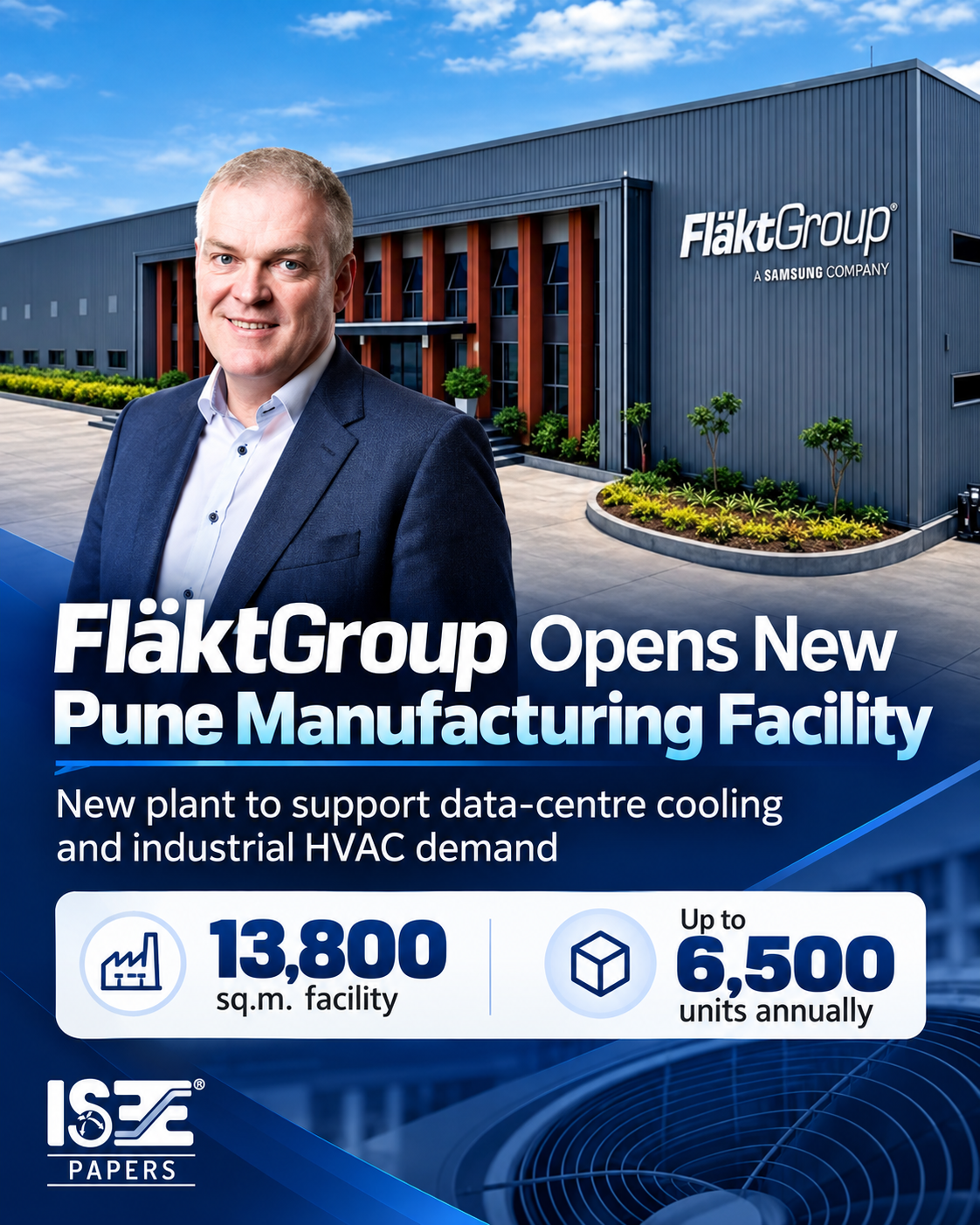
FläktGroup, a Samsung company and global provider of air technology and cooling solutions, has opened a new manufacturing facility in Pune to produce HVAC and specialised cooling equipment for data centres, industrial facilities and other high-demand applications.
The facility spans approximately 13,800 sq.m., with more than 12,000 sq.m. dedicated to production, and has the capacity to manufacture up to 6,500 units annually.
The expansion comes as rapid growth in artificial intelligence, cloud computing and digital services continues to increase demand for data-centre infrastructure, creating opportunities across the wider supply chain.
New Capacity for Critical Cooling Equipment
The Pune facility will manufacture a range of air-management and cooling systems, including Air Handling Units (AHUs), Fan Wall Units, Computer Room Air Handler (CRAH) systems, Computer Room Air Conditioning (CRAC) systems and heat exchangers.
These systems play an important role in data-centre operations, where large volumes of computing equipment generate substantial amounts of heat and require continuous, tightly controlled cooling.
FläktGroup’s new manufacturing capacity will also support specialised solutions used in high-density data-centre environments, including cooling and coolant-distribution technologies.
According to the company, construction of the facility began in January 2026, with customer deliveries commencing in July 2026, reflecting a relatively fast transition from construction to production.
FläktGroup has also reported that its India business has grown at a compound annual growth rate of more than 30% over the past five years.
Data Centres Are Creating Demand Beyond Data-Centre Buildings
India’s expanding data-centre market is often measured through planned capacity, megawatts, investment commitments and new campuses.
However, every new data-centre project also generates demand for a much broader infrastructure ecosystem.
Servers require cooling. Cooling requires specialised equipment. That equipment requires manufacturing plants, engineering capabilities, supply chains, logistics networks and industrial space.
FläktGroup’s Pune expansion illustrates how growth in digital infrastructure can translate into new industrial manufacturing requirements far beyond the boundaries of the data centres themselves.
As AI workloads become increasingly compute-intensive, thermal management is becoming an even more critical part of data-centre design. This is increasing demand for more efficient and specialised cooling technologies capable of supporting higher equipment densities.
Why Pune?
FläktGroup has highlighted Pune’s established industrial corridors, engineering talent, infrastructure and proximity to high-growth technology markets among the factors supporting the location of the new facility.
Pune already has a substantial manufacturing ecosystem spanning automotive, engineering, electronics and industrial technology. The addition of specialised data-centre infrastructure manufacturing further expands the city’s role in India’s technology-linked industrial economy.
The relationship can increasingly be viewed as a connected value chain:
AI growth → Data-centre expansion → Cooling demand → Equipment manufacturing → Industrial real estate
Within that chain, manufacturing hubs such as Pune could benefit even when the final data-centre facilities are developed elsewhere.
A Wider Industrial Real Estate Opportunity
The development also points towards an emerging opportunity for India’s industrial real estate sector.
Traditionally, demand for large manufacturing facilities has been closely associated with industries such as automobiles, engineering, consumer electronics and logistics.
The rapid expansion of digital infrastructure is introducing another category of occupier: companies manufacturing the physical systems required to build and operate the digital economy.
These include cooling systems, electrical equipment, power-management systems, backup power solutions, racks, cables and other mission-critical infrastructure.
As India’s data-centre capacity continues to expand, demand from these supporting manufacturers could create additional requirements for factories, warehouses and specialised industrial facilities.
Beyond Megawatts and Investment Announcements
The growth of India’s data-centre sector is usually discussed in terms of megawatts of capacity and billions of rupees in investment.
FläktGroup’s Pune facility highlights another metric worth following: the industrial footprint being created by the data-centre supply chain itself.
The next phase of industrial real estate growth may therefore come not only from companies manufacturing cars, electronics or consumer products, but also from businesses producing the equipment required to power, cool and operate India’s rapidly expanding digital infrastructure.
As AI and cloud infrastructure continue to scale, the economic impact of the data-centre boom is likely to extend increasingly into manufacturing clusters such as Pune, creating a wider industrial ecosystem around India’s digital economy.