










Smart Elevators Are No Longer the Future. They’re the Standard.
What was once considered advanced is now becoming baseline. Smart elevator systems are moving out of pilot phases and into everyday buildings across the world.
Advertisement Space
The Shift From Innovation to Infrastructure
Smart elevator systems are no longer experimental add-ons. They are becoming a core part of modern building infrastructure. As buildings grow taller, denser, and more complex, traditional elevator systems struggle to keep up with efficiency and user expectations.
Developers and architects are now integrating smart systems right from the planning stage. This shift marks a clear transition, elevators are no longer just vertical transport tools, they are intelligent systems that actively optimize movement within buildings.
A Market That Reflects the Change
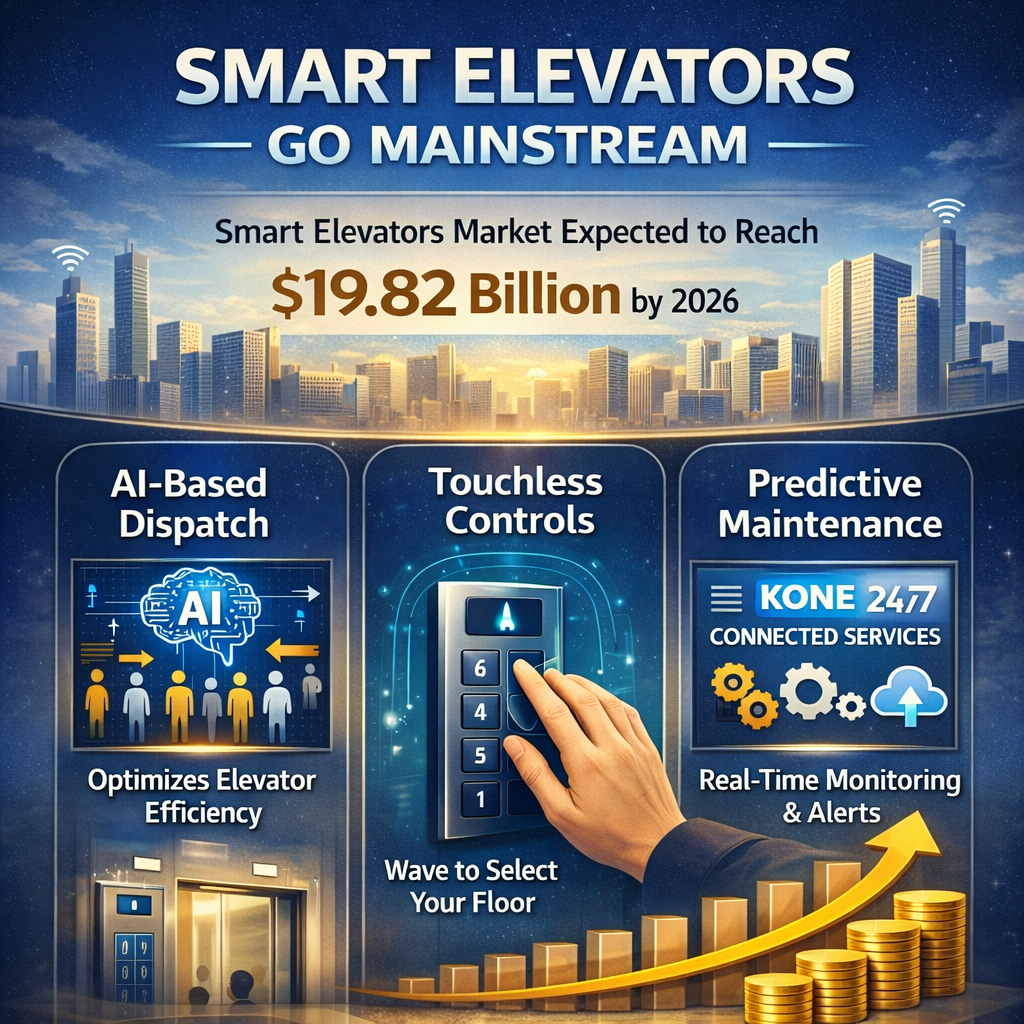
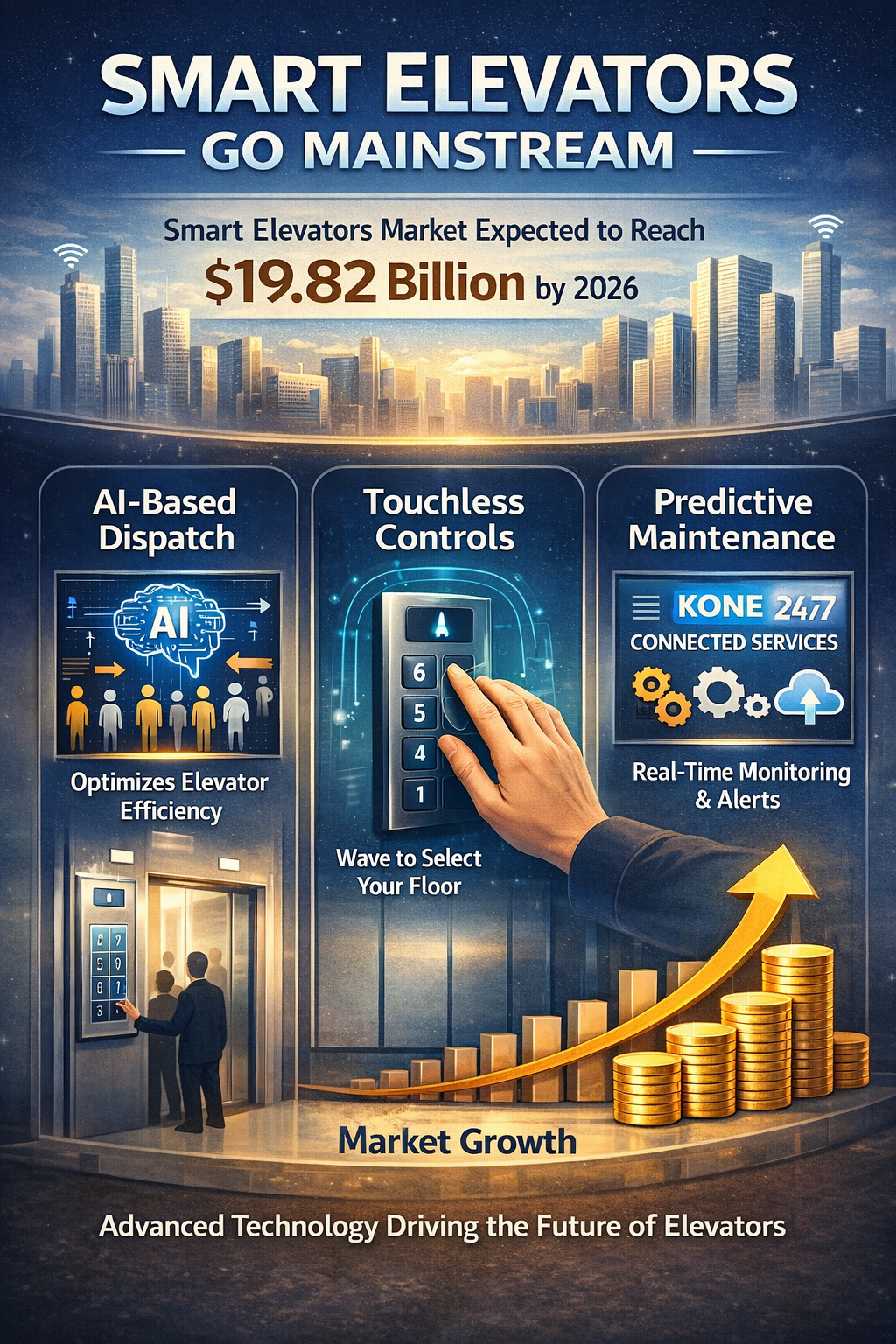
The numbers tell the story clearly. The global smart elevators market is expected to reach $19.82 billion by 2026. This growth is not driven by hype but by real-world demand for efficiency, safety, and data-driven operations.
From commercial towers to residential high-rises, smart elevators are becoming a necessity rather than a luxury.
Advertisement Space
AI-Based Dispatch Systems
One of the most impactful innovations is AI-based dispatch. Instead of reacting to button presses, these systems predict demand patterns and allocate elevators accordingly.
The result is reduced waiting time, optimized travel routes, and improved energy efficiency. In high-traffic buildings, this directly translates into better flow and user experience.
Touchless Controls Are Becoming Standard
User interaction is also evolving. Touchless controls, powered by sensors, mobile integrations, and gesture-based inputs, are becoming increasingly common.
Beyond hygiene, they offer convenience and accessibility. Users can call elevators through apps or simply use proximity-based systems without physical contact.
Advertisement Space
Predictive Maintenance Changes Everything
Maintenance is no longer reactive. Predictive maintenance platforms continuously monitor elevator performance, identifying potential failures before they occur.
Systems like KONE’s 24/7 Connected Services use real-time data to reduce downtime, improve safety, and extend equipment life.
For building owners, this means lower operational costs and fewer disruptions.
Why This Matters for the Industry
The rise of smart elevators reflects a broader shift in how buildings are designed and operated. Intelligence is no longer confined to software systems, it is embedded into physical infrastructure.
For developers, it improves asset value. For users, it enhances everyday experience. For operators, it brings control and predictability.
Advertisement Space
The Bottom Line
Smart elevators are no longer a differentiator. They are becoming the expectation.
As the market grows and technology matures, buildings that fail to adopt these systems will simply fall behind. The conversation is no longer about whether to implement smart elevators, it is about how soon.
This article is published for informational and editorial purposes only. Views expressed may not reflect those of ISEE Papers. We do not guarantee accuracy or completeness. For full details, please read our complete disclaimer here: https://iseepapers.com/isee-papers-website-disclaimer/