


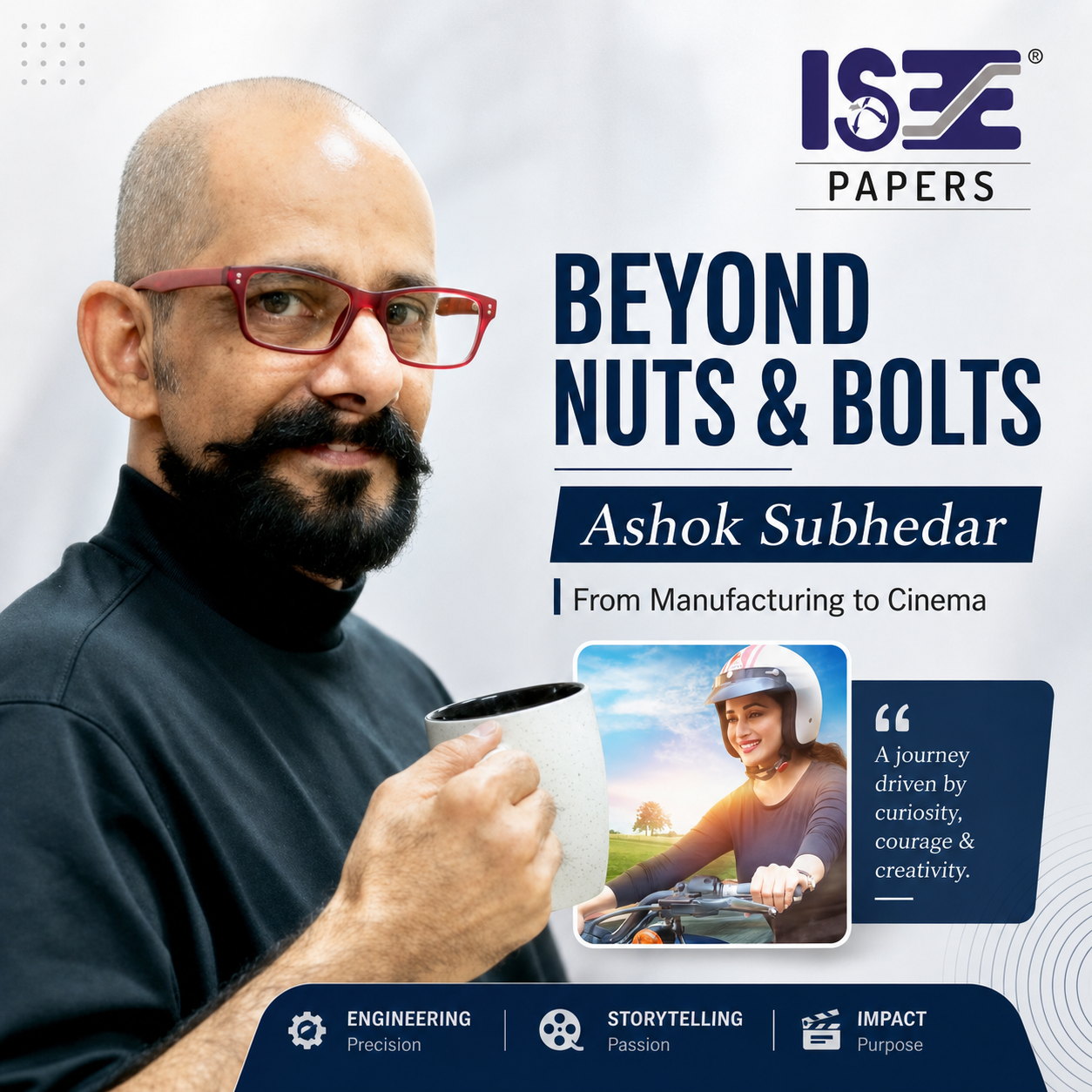
Ashok Subhedar: The Entrepreneur Who Built With Sweat Equity Before Capital
From a family garage to world-class manufacturing, from elevator components to defence applications, and from industrial discipline to Marathi cinema, Ashok Subhedar’s journey is a story of enterprise, resilience, and the belief that Indian manufacturing can stand tall on the world stage.
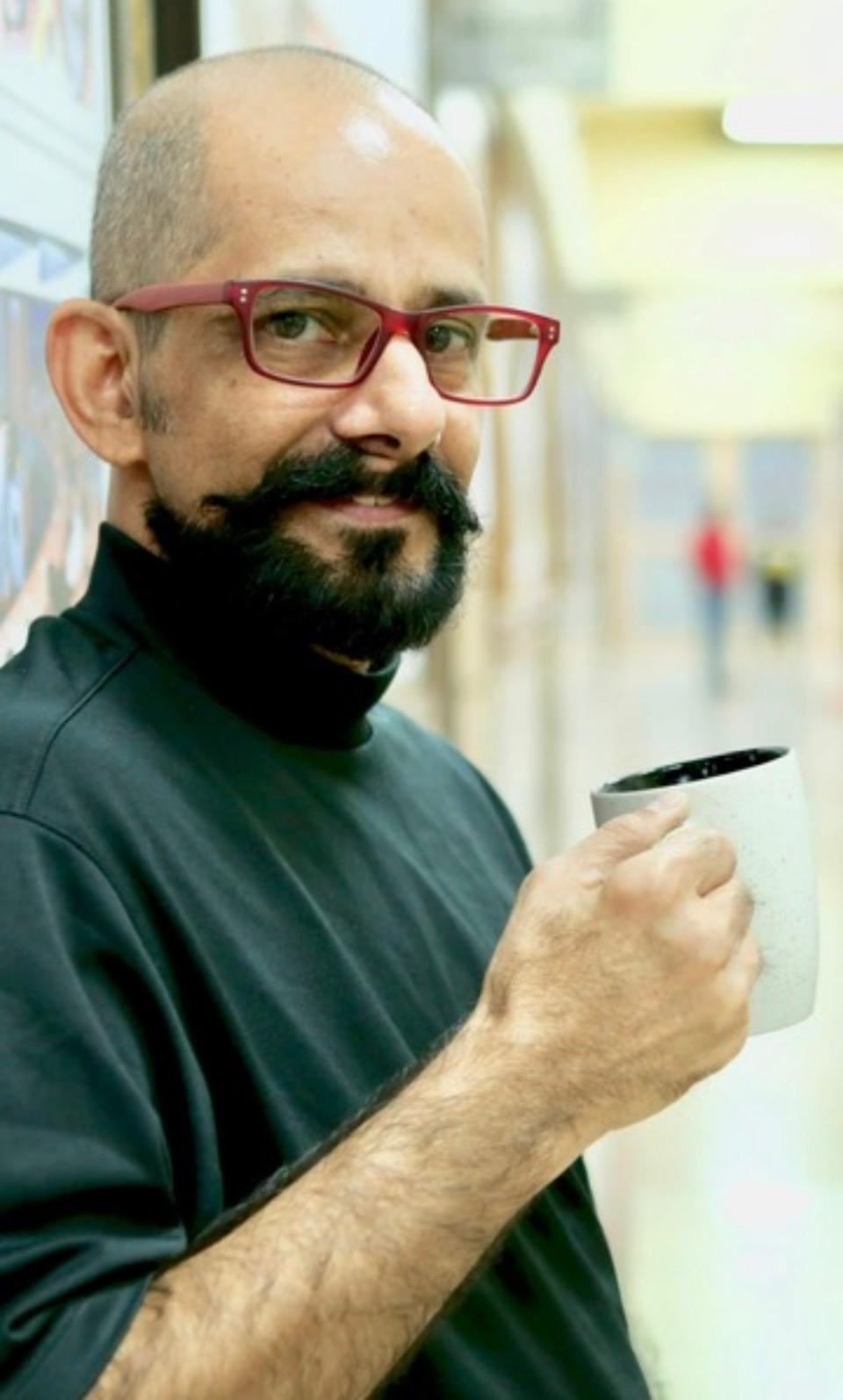
Some entrepreneurial stories begin with capital. Some begin with opportunity. Ashok Subhedar’s began with tools, discipline, and what he calls the most important equity one can inherit: sweat equity.
Born into a family where resilience was not an idea but a way of life, Subhedar grew up surrounded by examples of ambition built through effort. His grandfather rose from being a newspaper vendor in a small town in Madhya Pradesh to becoming one of the early gold medalists from Mumbai University, eventually joining the Indian Administrative Services. His father, an automobile engineer, had once sold milk bottles to buy his own bicycle and later worked as an insurance surveyor while repairing automobiles after office hours.
His mother, an artist by education, became one of his greatest inspirations. As a young woman, she convinced his father to secure land from MHADA and build a small bungalow in Juhu. The family struggled to make ends meet. She made and sold lemon and orange squash, tomato ketchup, and took art and handicraft tuition classes to support the household.
For Subhedar, enterprise was not a classroom lesson. It was the environment he grew up in.
Learning the value of work early
From the age of three, he would accompany his father on automobile repair jobs. His role was simple but precise: hand over the right tool or the right bolt in the right direction, so his father could work quickly and accurately. By the end of the job, he would be covered in muck, but also in satisfaction.
That early exposure shaped his relationship with work, quality, and making things with his own hands. “Impossible was nothing” was not a slogan for him. It was a practical habit.
During his engineering years, he received a junked Fiat car as a reward for reasonable marks in his first year. With almost no money, he rebuilt it bit by bit through savings, small jobs, automobile repair work, and help from his sisters. He had made a promise to his friends: once the car was ready, they would go to Goa. He kept that promise, with one condition fulfilled with pride: zero breakdowns and no need to open the bonnet during the trip.
The years that taught him resilience
After studying at K. J. Somaiya Polytechnic, Subhedar briefly worked with L&T in the switchgear design department. He later spent time in a shipping firm involved in charter hire, underwater ship salvaging, and scrapping of phased-out ships.
Those years were difficult, marked by long days, little sleep, hunger, and endless walking to save bus fare. But in his view, they became some of the best learning years of his life.
By the age of 23, he was married, with no fixed job and no steady income. His wife, Aarti, a postgraduate in commerce, stood firmly by him. She began taking mathematics tuitions in the neighbourhood while Subhedar used the one skill he could immediately put to work: repairing automobiles.
But he did not approach it like a typical roadside repair business. He insisted on quality work, genuine spares, value-added cleaning and polishing, doorstep delivery, and 24/7 breakdown support. The principle was clear from the beginning: do work so well that it builds trust.
The garage that became DSA
Like many Indian entrepreneurs, Subhedar tried several routes before finding the one that became his life’s work. He sold handpicked mangoes from Ratnagiri with a 100 percent replacement guarantee. He explored a motel project with MTDC, shrimp farming, land surveying, concrete garden pots, plant nurseries, and art and handicraft sales through Khadi Gram Udyog.
Four years into marriage, there was still no concrete future. He returned to his first professional base, L&T, where his friend Dhananjay Dhamankar introduced him to various departments. The goal became clear: manufacture electrical control panels.
With two friends, he started a firm called DSA with an initial capital of ₹1,000 each. Since his friends were employed, they supported him after office hours and on holidays. Subhedar took responsibility for any losses, while profits would be shared equally.
Around this time, he met Sanjay Belhe from Pune, who had started manufacturing import substitute sensors and instruments for industrial applications. Subhedar became their representative for the Mumbai region. The first order came from L&T itself. That opened his window to the market.
Eventually, he began pursuing opportunities independently. One of his early orders came from Marathe Udyog Bhavan for paper printing machines. He handled everything himself, from drawing board to delivery.
In those days, his factory was his father’s garage. The roof was demolished twice by the municipality as unauthorized construction, despite being inside their own premises. But the work continued.
The turning point: elevators and import substitution
A major turning point came through OTIS. After one of the exhibitions he had participated in while associated with Proto Control of Pune, OTIS invited him to develop import substitute products for elevators.
His first products were rejected outright by their design and quality control team. He received a 14-page report detailing why his product did not meet the requirement compared to the imported version. For many, that may have been a setback. For Subhedar, it became an education.
His response was simple: if a German company could produce it, why not him?
Around the same period, he received an opportunity from JNPT to develop a switch to replace a German switch used in conveyors, which had to be replaced every six months. He improved the design, changed the housing material to suit salty sea weather and Indian climate, and delivered the product in record time.
The product worked so well that replacement orders stopped coming because it lasted far longer than expected. It was a strange business lesson: too good can sometimes be bad for repeat revenue.
Subhedar returned to the OTIS-rejected switch, redesigned it, tested it, and certified it to match application needs rather than merely replicate specifications. This time, he submitted a cost-reduction proposal to OTIS. It was assessed and approved. The switch went on to become an industry standard, and subsequent developments for OTIS became benchmarks for the elevator industry in India.
This was the beginning of DSA’s deeper role in the elevator sector.
Building a world-class factory in Wada
As the business grew, the family garage was no longer enough. Subhedar needed space, people, and systems. He purchased an industrial gala worth ₹8 lakh, supported by his parents’ savings and Aarti’s jewellery. From there, the journey moved from one gala to four.
But his vision was larger. After travelling to Singapore in 1993 and later to Hannover, Germany, he became convinced that Indian manufacturing needed to think bigger, cleaner, and more globally. Changi Airport made a deep impression on him. His response was not to complain about India, but to ask what he could build differently in his own world.
He began searching for land and eventually found Wada, close to nature and within his target price. What started as a plan became an eight-acre vision.
The factory was designed with manufacturing flow, security, a canteen, guest lounge, kitchen garden, rest areas, courtyard, landscaping, and a temple of Lord Krishna. It also included a training centre, which he considered central to quality and continuous improvement. He even planned a rest area along the road for villagers walking in the sun, along with water for cattle and passers-by.
His brief was not merely to build a factory. It was to build something world-class with a human touch.
The challenges were immense. The land was low-lying and flooded during the monsoon. There was no power, water, or telephone infrastructure. Permissions required endless visits to government offices. He had to deal with local authorities, the Sarpanch, MSEB, BSNL, DIC Thane, the Collector at Jawahar, Sales Tax at Palghar, and Factory License offices at Kalyan.
By the year 2000, the factory was built. It went on to receive recognition from the District Industries Center, Thane, MCED, Saturday Club, BAM, ISQA, IEEMA, AMADA Japan, and others. Recognition from customers such as MDL, Siemens, ABB, and L&T further positioned DSA apart from the rest.
A particularly meaningful recognition came from the Central Excise Department for being an honest and timely taxpayer.
Quality, technology, and reinvestment
From inception, Subhedar followed one rule: company first. He says nearly 98 percent of profits were ploughed back into technology and business growth.
DSA became the first to introduce high-pressure water jet cutting technology for critical submarine parts. It invested in automatic testing of harnesses for railway projects, allowing zero-defect products and helping DSA become a Green Channel Partner for several customers.
The company manufactured the first control panel for shovel and coal-handling applications. It developed a true serial communication controller for elevator applications, which was patented in India and received recognition at Interlift, Augsburg, Germany.
The foundation remained strict quality control, discipline, training, and a commitment to continuous improvement.
Elevators, joint ventures, and global confidence
DSA’s elevator journey expanded significantly after the company developed a serial communication-based controller that could be upgraded for remote monitoring. In 2006, when this product was demonstrated at the first-ever elevator exhibition in India, sponsored by DSA, the event attracted visitors from across the world.
Several European companies approached DSA for joint ventures in India. These included complementary products such as electronic drives, automatic doors, fixtures, and home lifts. Having seen the Wada setup, they were confident in DSA’s capability.
For Subhedar, international representation was not optional. Regular visits to global exhibitions and participation in strategically important events were necessary for Indian companies to attract global interest.
Today, DSA’s elevator vertical includes world-class controllers, rescue devices, fixtures, cabins, switches, gearless and hydraulic systems for the MSME sector. The company also designs and produces automatic elevator doors through a joint venture with an Italian company and home lifts under the brand Swan through another Italian joint venture.
The larger impact is significant: DSA’s products helped small and medium Indian elevator companies improve their offerings, compete with international brands, and deliver world-class products made in India.
DSA’s key areas of work
- Elevator controllers, rescue devices, fixtures, cabins, switches, gearless systems, hydraulic systems, automatic doors, and home lifts.
- Power distribution panels up to 6000A, motor control centres, and automation panels.
- Railway and metro products including control panels, junction boxes, signal units, and traction control panels.
- Defence applications, including critical parts for submarines and import substitution products.
- Traffic management solutions and ruggedized drone parts for the domestic market.
Beyond elevators: power, railways, defence, traffic management, and drones
While elevators are central to his industry story, DSA’s work extends across several sectors.
In the power sector, the company manufactures power distribution panels up to 6000A, motor control centres, and automation panels for cement, steel, and allied industries. It developed and manufactured remote load management units for the RGGVY project in Karnataka and supplied control panels for Siemens’ MSEDCL APDRP projects.
In railways, DSA developed, manufactured, and supplied products for MRVC, control panels for diesel locomotives, traction control panels for new rakes, and control panels, junction boxes, and signal units for Mumbai Metro One and Chennai Metro.
In defence, DSA indigenously developed a cutting process for critical parts for submarines produced by MDL for the Indian Navy. The company produced critical parts, including air-conditioning ducts for Scorpene-class submarines.
The company continues to work on Atmanirbhar initiatives for defence, including critical application vertical transportation systems and other products for the armed forces.
DSA also entered traffic management after a call from the Joint Commissioner of Police’s office led to the development of a high-tech solution for towing vehicles. The solution was designed, developed, tested, and supplied in India.
Since 2025, the company has ventured into ruggedized drone parts for the domestic market, with the larger aim of eventually producing complete drones that are fully made in India. For this, DSA has tied up with institutions such as Symbiosis and IIT.
Crises, floods, and the test of resilience
Subhedar’s journey has also been marked by severe crises.
The first major blow came in 2002, when floods from the Vaitarna River submerged the factory under six inches of water. Raw material, finished goods, and equipment were damaged. The only road to the factory was underwater. With a few team members and his parents, Subhedar protected whatever could be saved. The next day, the team returned, and the factory was brought back into action without delays in scheduled deliveries or quality issues.
The 2005 Mumbai floods affected his family home in Juhu, where his parents remained in knee-deep water for 24 hours before he could contact them. His Honda Accord was completely submerged, while Aarti’s Honda City was barely saved.
The following year, another flood caused by rain, dam water release, and high tide submerged the Wada factory under half a metre of water within an hour. It took a month to restore full operations, but committed deliveries were still protected through round-the-clock work.
Later, a man-made crisis emerged through labour unrest. What he describes as the greed of a few members brought the factory to a standstill. Five years of negotiations followed. Operations continued through outsourcing and alternate arrangements, but assets, including personal assets, had to be sold before all workmen were paid.
The blow was severe. But Subhedar says the brand remained intact, and the determination remained rock solid.
People, training, and dignity at work
For Subhedar, manufacturing was never only about output. It was about people. He referred to employees as team members and believed privileges had to be earned through discipline and commitment.
Training was a core part of DSA’s culture. First-aid and fire-fighting training were held annually. Continuous improvement was encouraged. Ideas were welcomed from every level.
Annual family gatherings were not token events. Team members would proudly take their families around “their factory”. Women’s Day was also important at DSA. Aarti used the occasion to impart basic knowledge to tribal and Adivasi women working at the company, encouraging them to understand their rights and live with dignity.
One of the recognitions Subhedar values most came not from industry bodies, but from local villagers, who saw DSA as one of the best companies in the region and a place where their sons and daughters could work with pride.
Entrepreneurship as national responsibility
Subhedar believes India needs more entrepreneurs because entrepreneurs create jobs. He argues that training institutes may create employable youth, but someone must create the opportunities that employ them.
His view of MSMEs is direct. He believes they must be treated as a priority and protected sector, supported by regulatory systems that nurture rather than suspect entrepreneurs. In his experience, many authorities treat entrepreneurs as defaulters or dishonest citizens by default. He believes India needs dedicated cells where regulatory authorities work under one roof to nurture, develop, and sustain MSMEs.
On funding, he believes many entrepreneurs lose out not because their ideas lack merit, but because they lack financial presentation skills and structured support. He suggests that funding should be accompanied by expert guidance in technology, commercialization, and staged growth.
His advice to young entrepreneurs is unsentimental: unless you are ready to sweat it out, do not start. Once you start, do not stop until you succeed. And after success, do not relax. Go to the next level.
From manufacturing to cinema
Subhedar’s interests extend beyond manufacturing. He enjoys training, agriculture, travel, networking, and eventually entered film production to reach the masses.
He observed that many Marathi films were being produced by non-Maharashtrian producers and wondered why he should not support upcoming Marathi talent himself. This led to the formation of Blue Mustang Creations Pvt. Ltd., focused on content-driven Marathi cinema.
After smaller projects such as product films and short films, the company got its major breakthrough with the Marathi feature film Bucket List, starring Madhuri Dixit. The film was released globally and accepted by audiences worldwide.

For Subhedar, filmmaking carried lessons familiar from manufacturing: start on time, complete ahead of schedule, plan meticulously, and execute with discipline. Working with Madhuri Dixit, he says, was exemplary, describing her as humble, grounded, and outstandingly professional.
The company later developed another story set around 1990, built around the relationship between a father and child, and the father’s fight to help his family retain the child’s custody against all odds. The film was well received and earned state awards and media recognition.
The pursuit continues
Ashok Subhedar’s life is not a straight line from entrepreneur to industrialist. It is a story of hands-on learning, Indian manufacturing, import substitution, world-class ambition, local employment, elevator innovation, defence contribution, creative risk-taking, and resilience through repeated crises.
He built from a garage, expanded into a world-class factory, supported Indian elevator companies, contributed to national infrastructure and defence, and entered cinema with the same discipline he brought to manufacturing.
His story belongs in Beyond Nuts & Bolts because it is exactly that: a look beyond products, panels, controllers, switches, and systems, into the person, purpose, and persistence behind them.
For Ashok Subhedar, that is not just a line. It is the working principle of a lifetime.
What an inspiring journey!
Kudos to the vision and persistence behind it!