



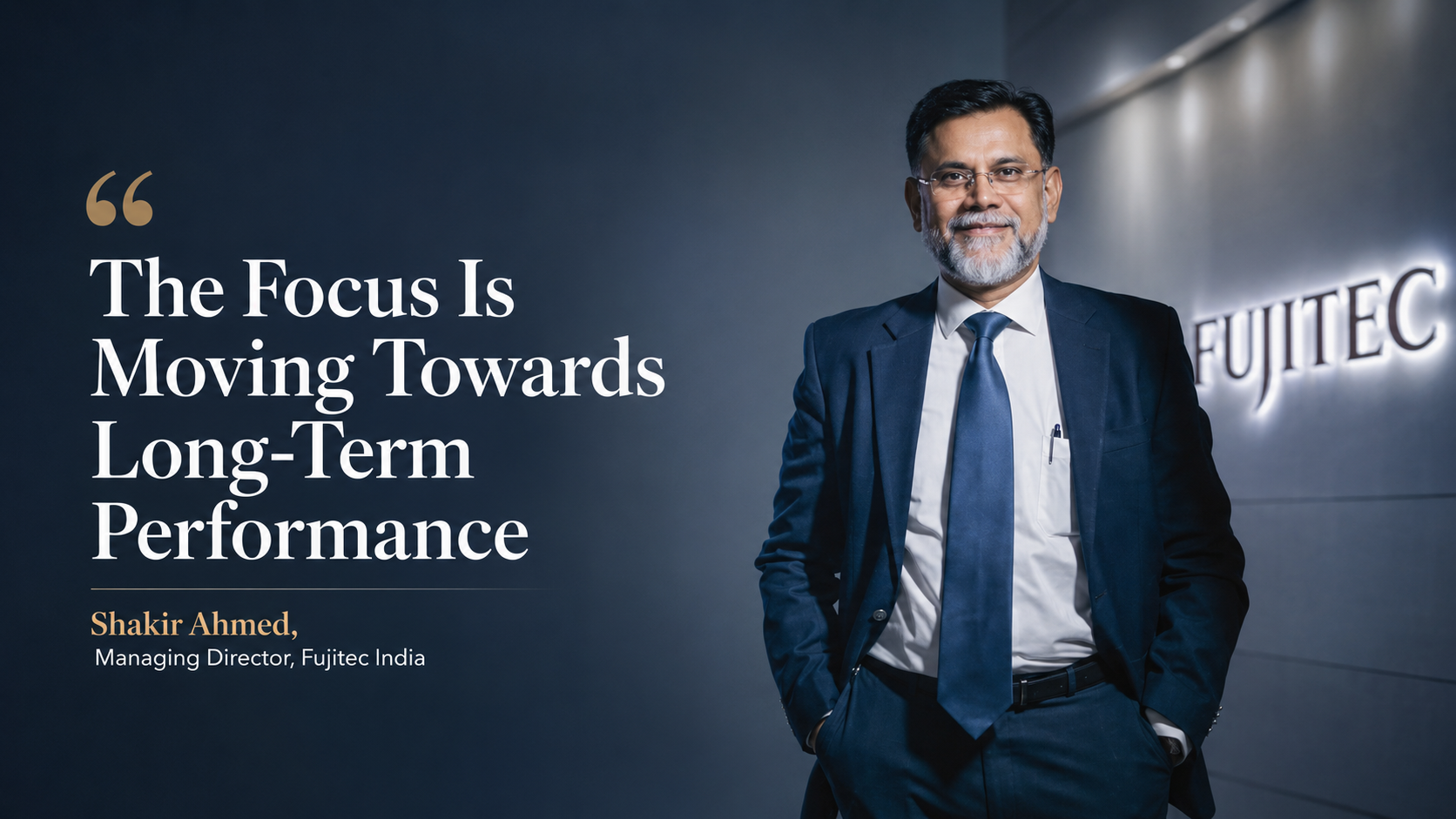
Fujitec India Managing Director Shakir Ahmed on Long-Term Elevator Performance
India’s vertical transportation market is entering a more mature phase, where reliability, energy efficiency, safety, and lifecycle performance are becoming stronger decision-making factors across residential, commercial, and infrastructure projects.
The conversation around elevators and escalators in India is gradually moving beyond installation and upfront cost. As buildings become taller, infrastructure becomes busier, and users expect safer and smoother movement, the industry is placing greater emphasis on systems that can perform consistently over the long term.
This shift was highlighted by Shakir Ahmed, Managing Director, Fujitec India, in a recent interaction with Construction Week India, where he spoke about the growing demand for new installations and the increasing focus on reliability, energy efficiency, and long-term value in the vertical transportation sector.
Reliability Is Becoming a Core Customer Expectation
According to Ahmed, vertical transportation systems in India must be designed to perform under varied and often demanding operating conditions. Power fluctuations, changing usage patterns, and environmental factors can all affect system performance, making reliability a key part of customer value.
Features such as surge and voltage protection, remote monitoring, and responsive emergency systems are becoming increasingly important. These technologies help improve operational confidence and user safety, especially in segments such as home elevators, where regulations are still evolving.
In such cases, the responsibility on manufacturers becomes even more important. The system has to deliver not just convenience, but dependable safety and long-term performance.
The market is moving from an installation-first mindset to a performance-first mindset.
Energy Efficiency and Lifecycle Value Are Driving Choices
Energy efficiency is now a major consideration for building owners, developers, and consultants. Technologies such as VVVF drives, gearless machines, and regenerative systems are widely adopted because they help reduce energy consumption and improve operational efficiency.
These solutions also align with green building requirements, making them relevant for projects where sustainability and operating cost are part of the larger design brief.
While advanced systems may involve variations in upfront cost depending on configuration, customers are increasingly evaluating elevators and escalators on the basis of lifecycle value. Lower operating cost, better sustainability, improved reliability, and long-term performance are becoming central to the buying decision.
Modernisation Offers a Practical Path to Better Performance
Modernisation is another important area where vertical transportation vendors can deliver value. Upgrading key components such as controllers, drives, and safety systems can significantly improve elevator performance and reliability without causing major disruption to existing buildings.
For older properties, this offers a practical way to improve user experience, enhance safety, and extend the useful life of existing elevator systems. It also allows building owners to respond to current performance expectations without immediately replacing complete systems.
Infrastructure Is Emerging as a Strong Growth Driver
Demand for new installations continues to come from commercial developments and high-rise residential projects. However, infrastructure is now emerging as one of the strongest growth drivers for the vertical transportation industry.
Metro stations, railway stations, and airports require systems that can handle high traffic volumes with consistent reliability. In these environments, elevators and escalators are not just building amenities. They are critical movement systems that support passenger flow, accessibility, and safe dispersal.
Fujitec India’s order mix reflects this wider market movement, with a balance across high-rise, low-rise, and infrastructure projects. Within residential, the premium segment is also showing stronger traction, including growing interest in home elevators.
A More Mature Market Conversation
The larger signal for the industry is clear. India’s elevator and escalator market is moving from a product-first conversation to a performance-first conversation.
As urban infrastructure expands and buildings become more complex, vertical transportation systems will be judged not only by their specifications, but by how consistently they perform across years of operation.
Reliability, safety, sustainability, and lifecycle efficiency are now becoming the real measures of customer value. For manufacturers, consultants, developers, and building owners, the focus is increasingly on systems that are built not just to move people, but to perform dependably over the long term.