








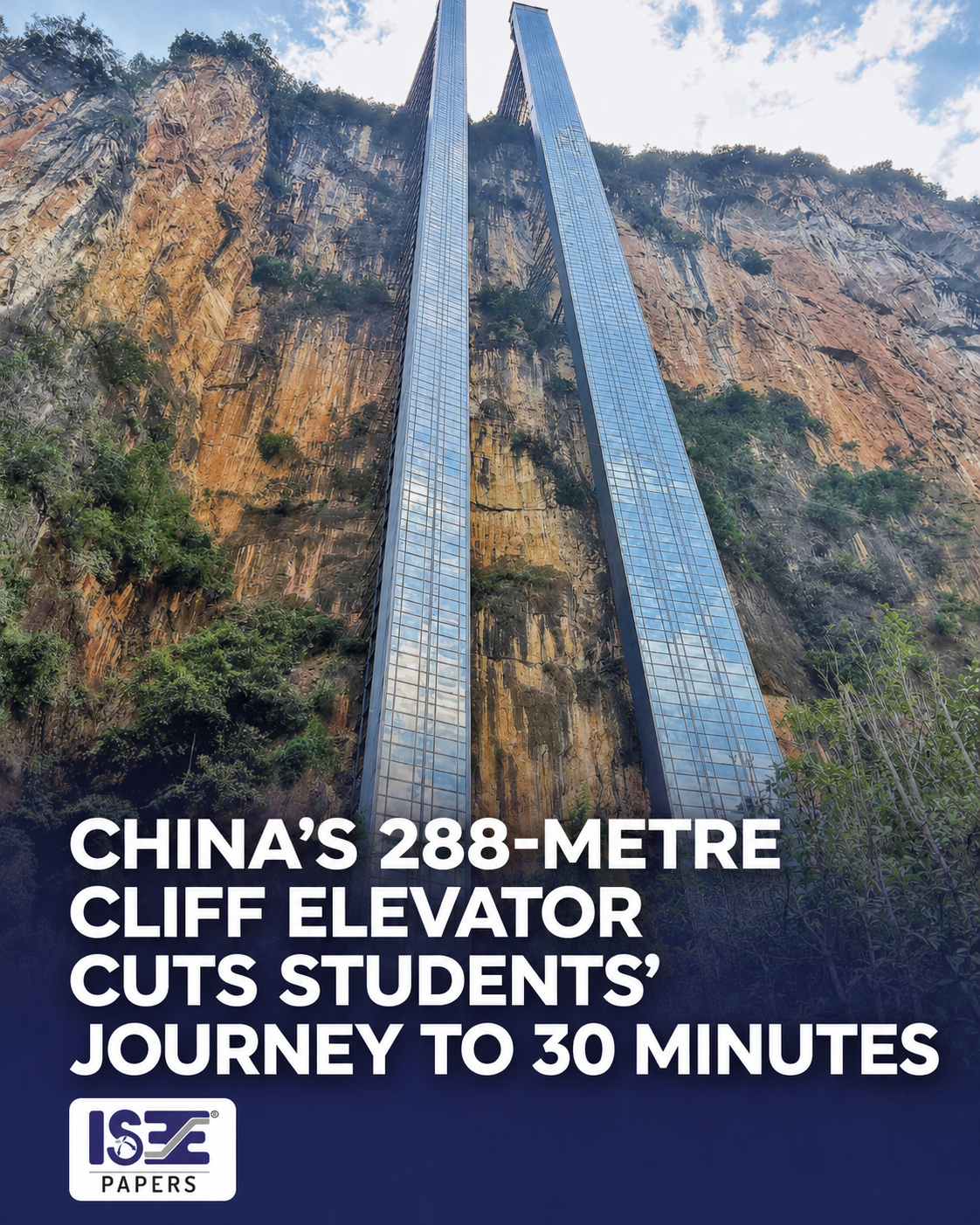
A newly opened 288-metre cliff elevator in China’s Yunnan province is making the journey to school faster, safer and more reliable for children living in the remote Nizhuhe Grand Canyon.
Named the Fuyao Ladder, the glass elevator forms part of an unusual transport network known locally as the “aerial school bus”. By combining shuttle buses, cliff elevators and an aerial cable car, the system has reduced a difficult mountain journey of more than three hours to approximately 30 minutes.
The project serves Nizhuhe Village in Xuanwei, which lies at the bottom of a deep canyon near the border between Yunnan and Guizhou provinces. The local primary school is situated above the canyon, separated from the village by a vertical difference of more than 500 metres.
Before the transport system was introduced, students had to follow steep and narrow paths across the mountainside. The route was especially challenging during wet weather, when sections of the trail could become slippery and dangerous.
Second Elevator Strengthens the “Aerial School Bus”
The Fuyao Ladder is the second cliff elevator constructed at the site. It stands alongside the 268-metre Qingyun Ladder, which entered operation in 2022.
The earlier elevator, together with a cable car covering an additional vertical difference of more than 200 metres, first created the faster connection between the village and the school. Students travel by shuttle bus to the elevator, ascend the cliff and then transfer to the cable car before completing the final part of their journey.
However, increasing tourism in the Nizhuhe Grand Canyon placed growing pressure on the original elevator. During busy periods, visitor traffic reportedly caused congestion and affected students’ access to the system.
The addition of the Fuyao Ladder provides greater capacity and allows the two elevators to operate together. Their combined handling capacity has now reached approximately 1,200 passengers per hour, helping separate school movement from tourist traffic and improve the reliability of the route.
Transparent Elevator Travels at 5 Metres Per Second
The Fuyao Ladder features a fully transparent, 360-degree glass curtain wall designed to give passengers uninterrupted views of the canyon.
Travelling at up to 5 metres per second, the elevator can complete its 288-metre vertical journey in under a minute. It is 20 metres taller than the neighbouring Qingyun Ladder.
According to reports, the expanded system could also increase the scenic area’s daily visitor capacity from around 4,000 to approximately 15,000 people.
Students and residents of Nizhuhe and Guanzhai villages are permitted to use the elevators and cable car free of charge. A dedicated route has also been created for schoolchildren, while police officers and site personnel are stationed along the system during morning and evening travel periods.
By the end of July 2026, the aerial school bus network had reportedly completed nearly 1,000 student journeys safely.
The Fuyao Ladder was developed, manufactured and installed by Ningbo Hongda Elevator Co., Ltd., which operates internationally as Ningbo Hosting Elevator Co., Ltd. The company also built the neighbouring Qingyun Ladder.
Vertical Mobility Supporting Education and Tourism
Beyond shortening the school commute, the cliff elevator network has improved connectivity for residents and supported tourism-led economic activity in the surrounding villages.
The easier route has helped residents transport local produce out of the canyon, while the growing number of visitors has created opportunities for homestays, guides, restaurants and small businesses selling regional products.
The Fuyao Ladder demonstrates how vertical transportation can address challenges extending far beyond conventional buildings. In Yunnan, elevator and cable-car technology is connecting an isolated community with education, tourism and wider economic opportunities.
More importantly, the second elevator ensures that increasing visitor numbers do not disrupt the system’s original social purpose, providing local children with a dependable and much safer journey to school.
Sources: New Atlas | Xinhua | CCTV Asia Pacific social video