
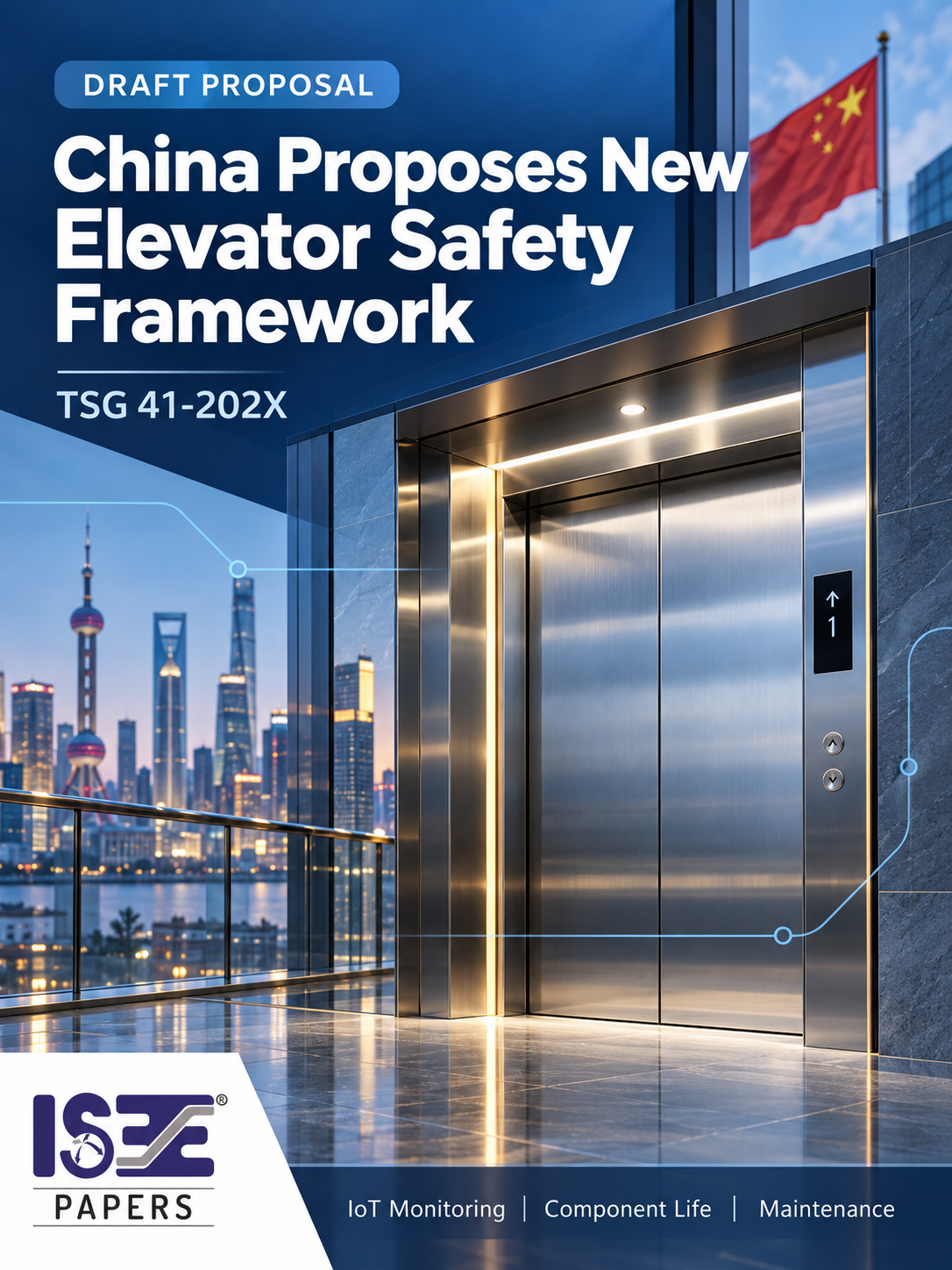








The proposed TSG 41-202X framework could reshape elevator design and after-sales service, with a focus on equipment durability, monitoring and access for independent maintenance providers
China’s proposed elevator and escalator safety framework, TSG 41-202X, is prompting debate over requirements that could change how elevators are manufactured, monitored and maintained.
According to the reference paper supplied for this article, the second consultation round has concluded, attracting more than 2,000 comments. The paper highlights proposals covering factory-installed monitoring equipment, automatic brake monitoring, declared service life for suspension components and restrictions on technical measures that prevent third-party maintenance.
The proposals remain subject to the final official text. The reference paper is an industry analysis of the draft, rather than an official regulatory announcement. 1792145369788.pdf
Monitoring equipment proposed as a factory feature
One of the changes described in the paper is a requirement for elevators to incorporate monitoring terminals with an open output interface compliant with GB/T 42616.
The terminals would provide operating information, including cumulative operating time, door-opening counts, journey counts, faults, events and alarms. The paper also describes provisions for retaining and transmitting the elevator’s status before a power failure, alongside electrical protection requirements.
If adopted as described, these measures would provide a more consistent foundation for remote diagnostics and maintenance planning. Their practical value would depend on how effectively service teams interpret the information and respond to emerging faults.
Brake monitoring receives greater attention
The reference paper also identifies proposed requirements addressing brake performance and monitoring intervals.
Its account of the draft states that the remaining brake components must be capable of safely decelerating, stopping and holding the car under specified conditions if one set fails. It describes a braking-force monitoring interval generally no longer than 15 days, reducing to 24 hours where the brake performs certain additional protective functions.
The paper further states that a failed monitoring result would prevent the elevator’s next normal start.
These provisions, if retained in the final regulation, would place greater emphasis on verifying the continued performance of a critical safety system during operation.
Manufacturers could face longer component life commitments
Another significant proposal concerns manufacturer declarations for suspension components.
According to the paper, the draft specifies declared service-life thresholds of at least 10 years or two million drive-machine starts for suspension steel wire ropes, and 20 years or four million starts for coated belts. It also describes free replacement obligations where components reach discard conditions before the applicable declared threshold.
The final wording will be important in determining how these commitments apply, including operating conditions, exclusions and the relationship between calendar life and usage.
The paper also identifies proposed replacement commitments for specified buffers and counterweight components. Together, these provisions could influence material selection, product design, warranty exposure and long-term service costs.
Third-party maintenance access emerges as a key issue
The analysis describes draft restrictions on technical measures that obstruct independent maintenance providers.
It raises concerns about proprietary commissioning tools, component coding and digital matching arrangements that can leave customers dependent on the original manufacturer, even when replacement components are available.
If the final framework restricts such practices, manufacturers and service providers would need to review how they manage technical access while maintaining safe configuration, component compatibility and accountability.
The potential commercial implications extend to connected service platforms. Their value would increasingly depend on the quality of diagnostics, response and support they deliver.
Maintenance providers may need to rethink revenue models
The paper argues that longer-lasting components and wider use of monitoring could challenge service models that depend heavily on major component replacement.
Under basic maintenance contracts, routine fees may cover inspections, cleaning, lubrication, adjustment and rescue support, while major repairs are charged separately. Longer component life could reduce some replacement income, increasing the importance of pricing routine services sustainably.
For maintenance businesses, the potential shift is towards demonstrating value through reliable operation, early fault detection, effective intervention and clear equipment records.
Remote monitoring could support that transition, but any change to physical maintenance frequency would need to follow applicable requirements, manufacturer instructions and equipment-specific safety needs.
Implementation will determine the impact
The proposed framework brings several connected issues into focus: how long equipment should last, who can maintain it, what operating information should be accessible and how safety responsibilities should be shared.
For manufacturers, the immediate task is to assess the draft’s implications for design, monitoring interfaces and component life commitments. Maintenance providers will need to examine technical capabilities, service pricing and their ability to support a more data-informed approach.
The extent of the change will depend on the final published provisions, transition arrangements and enforcement. Until those are confirmed, the measures described remain proposals under discussion.
Source: Supplied industry analysis of TSG 41-202X. The consultation feedback total and detailed clause interpretations are attributed to that paper and have not been independently verified against the official draft.