

ISEE Papers

Ashok Subhedar: DSA Founder’s Journey in Elevators, Manufacturing & Cinema

Beyond Nuts & Bolts Ashok Subhedar: The Entrepreneur Who Built With Sweat Equity Before Capital From a family garage to world-class manufacturing, from elevator components to defence applications, and from industrial discipline to Marathi cinema, Ashok Subhedar’s journey is a story of enterprise, resilience, and the belief that Indian manufacturing can stand tall on the world stage. Ashok Subhedar, entrepreneur, manufacturer, and founder of DSA. Some entrepreneurial stories begin with capital. Some begin with opportunity. Ashok Subhedar’s began with tools, discipline, and what he calls the most important equity one can inherit: sweat equity. Born into a family where resilience was not an idea but a way of life, Subhedar grew up surrounded by examples of ambition built through effort. His grandfather rose from being a newspaper vendor in a small town in Madhya Pradesh to becoming one of the early gold medalists from Mumbai University, eventually joining the Indian Administrative Services. His father, an automobile engineer, had once sold milk bottles to buy his own bicycle and later worked as an insurance surveyor while repairing automobiles after office hours. His mother, an artist by education, became one of his greatest inspirations. As a young woman, she convinced his father to secure land from MHADA and build a small bungalow in Juhu. The family struggled to make ends meet. She made and sold lemon and orange squash, tomato ketchup, and took art and handicraft tuition classes to support the household. For Subhedar, enterprise was not a classroom lesson. It was the environment he grew up in. Learning the value of work early From the age of three, he would accompany his father on automobile repair jobs. His role was simple but precise: hand over the right tool or the right bolt in the right direction, so his father could work quickly and accurately. By the end of the job, he would be covered in muck, but also in satisfaction. That early exposure shaped his relationship with work, quality, and making things with his own hands. “Impossible was nothing” was not a slogan for him. It was a practical habit. During his engineering years, he received a junked Fiat car as a reward for reasonable marks in his first year. With almost no money, he rebuilt it bit by bit through savings, small jobs, automobile repair work, and help from his sisters. He had made a promise to his friends: once the car was ready, they would go to Goa. He kept that promise, with one condition fulfilled with pride: zero breakdowns and no need to open the bonnet during the trip. The years that taught him resilience After studying at K. J. Somaiya Polytechnic, Subhedar briefly worked with L&T in the switchgear design department. He later spent time in a shipping firm involved in charter hire, underwater ship salvaging, and scrapping of phased-out ships. Those years were difficult, marked by long days, little sleep, hunger, and endless walking to save bus fare. But in his view, they became some of the best learning years of his life. By the age of 23, he was married, with no fixed job and no steady income. His wife, Aarti, a postgraduate in commerce, stood firmly by him. She began taking mathematics tuitions in the neighbourhood while Subhedar used the one skill he could immediately put to work: repairing automobiles. But he did not approach it like a typical roadside repair business. He insisted on quality work, genuine spares, value-added cleaning and polishing, doorstep delivery, and 24/7 breakdown support. The principle was clear from the beginning: do work so well that it builds trust. The garage that became DSA Like many Indian entrepreneurs, Subhedar tried several routes before finding the one that became his life’s work. He sold handpicked mangoes from Ratnagiri with a 100 percent replacement guarantee. He explored a motel project with MTDC, shrimp farming, land surveying, concrete garden pots, plant nurseries, and art and handicraft sales through Khadi Gram Udyog. Four years into marriage, there was still no concrete future. He returned to his first professional base, L&T, where his friend Dhananjay Dhamankar introduced him to various departments. The goal became clear: manufacture electrical control panels. With two friends, he started a firm called DSA with an initial capital of ₹1,000 each. Since his friends were employed, they supported him after office hours and on holidays. Subhedar took responsibility for any losses, while profits would be shared equally. Around this time, he met Sanjay Belhe from Pune, who had started manufacturing import substitute sensors and instruments for industrial applications. Subhedar became their representative for the Mumbai region. The first order came from L&T itself. That opened his window to the market. Eventually, he began pursuing opportunities independently. One of his early orders came from Marathe Udyog Bhavan for paper printing machines. He handled everything himself, from drawing board to delivery. In those days, his factory was his father’s garage. The roof was demolished twice by the municipality as unauthorized construction, despite being inside their own premises. But the work continued. The turning point: elevators and import substitution A major turning point came through OTIS. After one of the exhibitions he had participated in while associated with Proto Control of Pune, OTIS invited him to develop import substitute products for elevators. His first products were rejected outright by their design and quality control team. He received a 14-page report detailing why his product did not meet the requirement compared to the imported version. For many, that may have been a setback. For Subhedar, it became an education. His response was simple: if a German company could produce it, why not him? Around the same period, he received an opportunity from JNPT to develop a switch to replace a German switch used in conveyors, which had to be replaced every six months. He improved the design, changed the housing material to suit salty sea weather and Indian climate, and delivered the product in record time. The product worked so well that replacement

Beyond Nuts & Bolts: The Journey of Preeti Tripathi

Beyond Nuts & Bolts: The Journey of Preeti Tripathi A story of resilience, discipline, and balance, from the elevator industry to the judo arena. Brief Snapshot Preeti Tripathi, Manager – EI Sales at Schindler India, exemplifies resilience and versatility. From experimenting across back office, sales, product, and service maintenance to becoming a two-time Commonwealth Judo Champion and National Referee, she has broken barriers with discipline and determination. Today, she inspires colleagues and her daughter, proving that success extends far beyond work. Preeti Tripathi’s journey is a story of resilience, balance, and quiet defiance of convention. With a background in commerce and finance, she stepped into the highly technical elevator industry, a space rarely chosen by non-engineers. What defines her journey is not just entry into the industry, but her constant willingness to evolve within it. She began in 2010 as an EI Back Office Executive, building a strong foundation in operations before moving into customer-facing roles as Account Executive and later Account Manager. What followed was not a linear climb, but a deliberate exploration. From estimation to product to service functions, each transition added depth to her understanding of the business. From Assistant Manager, Estimation, to Area Manager, Mumbai & Thane/KDMC, and later Business Development Manager – NI Sales, South Delhi, she consistently stepped into unfamiliar territory. Today, as Manager – EI Sales, backed by her experience as Service Commercial Manager, she brings a rare, full-spectrum view of the business, one that cuts across sales, product, and service. Yet, her professional journey is only one part of the story. Her discipline reveals itself most clearly outside the workplace. Starting her days early, she committed herself to judo, balancing rigorous training with a demanding career and motherhood. In 2018 and 2019, she achieved what very few manage, winning the Commonwealth Judo Championship twice while being a full-time professional and raising a young daughter. Today, her journey in the sport continues with equal intensity. As a National Judo Referee, and now working towards becoming an International Referee, she demonstrates that excellence is not a milestone, but a continuous process of showing up, learning, and pushing forward. At home, that same spirit is quietly taking root in the next generation. Her daughter has already begun her own journey, training in swimming and mallakhamb, and winning medals at a young age. It adds another layer to Preeti’s story, one where she is not only breaking barriers herself, but shaping a mindset that will carry forward. Preeti’s journey stands as a reminder that success does not have to be singular. It can exist across roles, across passions, and across generations. It asks a simple question to every working professional, what if you did not have to choose between responsibility and passion, and instead chose to pursue both with equal conviction.

Punit Karelia | Precision at Work, Progress in Play

Beyond Nuts & Bolts Punit Karelia | Precision at Work, Progress in Play In the vertical transportation ecosystem, where performance, durability, and engineering precision define credibility, Punit Karelia has built his foundation on exactly these principles. As the Founder of CN Engineering Works, a third-generation Mumbai-based company, Karelia operates in a space where consistency is not optional. The company specializes in the design and manufacturing of high-quality elevator door systems, products known for their performance, durability, and ability to compete with leading global brands. But beyond engineering drawings, manufacturing timelines, and product execution, there is another dimension to his journey, one that reflects the same discipline, just in a different arena. Stepping Outside the Factory Floor On 18th April, Karelia participated in an international padel tournament held at Padel Bay Phuket, Thailand. Competing in the D to C+ category, he was among 24 international players, a mix of experienced competitors and emerging talent. The format was fast-paced and demanding, requiring not just physical agility, but sharp tactical awareness and the ability to adapt in real time. At this level, padel is a sport of quick judgment and tighter margins. Consistency matters. Adaptability matters. Composure matters. In that sense, it is not very different from engineering, where performance is often decided by attention to small but critical details. Tournament: Saturday SGS Organizer: Padel Bay Phuket Date & Time: 18 April, 12:30 PM to 3:00 PM Venue: Padel Bay Phuket, Phuket, Thailand Category: D to C+ (Intermediate Level) Recognition Earned, Not Claimed Amidst a diverse and competitive field, Karelia was awarded the “Most Improved Player” of the tournament. The recognition was not built around one standout moment. It reflected something more substantial, performance progression, adaptability, and a competitive spirit that strengthened through the course of the event. “Competing at an international level was both challenging and enriching. The experience pushed me to elevate my game, and being recognized as the ‘Most Improved Player’ made it especially meaningful.” The Value of the Experience The tournament was professionally organized and delivered a highly engaging competitive environment. With players coming from different backgrounds and playing styles, every match demanded recalibration. For Karelia, the experience offered more than participation. It brought exposure to international playing standards, high-pressure match situations, and the kind of sporting atmosphere that tests both discipline and mindset. That is often where true growth shows up, not in comfort, but in the ability to respond when the standard rises. Beyond the Obvious There is a clear thread connecting both sides of Karelia’s journey. The same mindset that helps build durable, high-performance elevator door systems also shapes improvement on the court: discipline, process, precision, and the willingness to evolve. In an industry often defined by technical specifications and business conversations, stories like these reveal a wider picture. The people behind the sector are not limited to the roles they perform at work. They are also shaped by what they pursue beyond it, the challenges they take on, the standards they expose themselves to, and the growth they choose for themselves. In Punit Karelia’s case, that story extends from the factory floor in Mumbai to an international padel court in Phuket, where progress, once again, was built point by point.

Ronnie Dante, From Apprentice to Global Technical Leadership

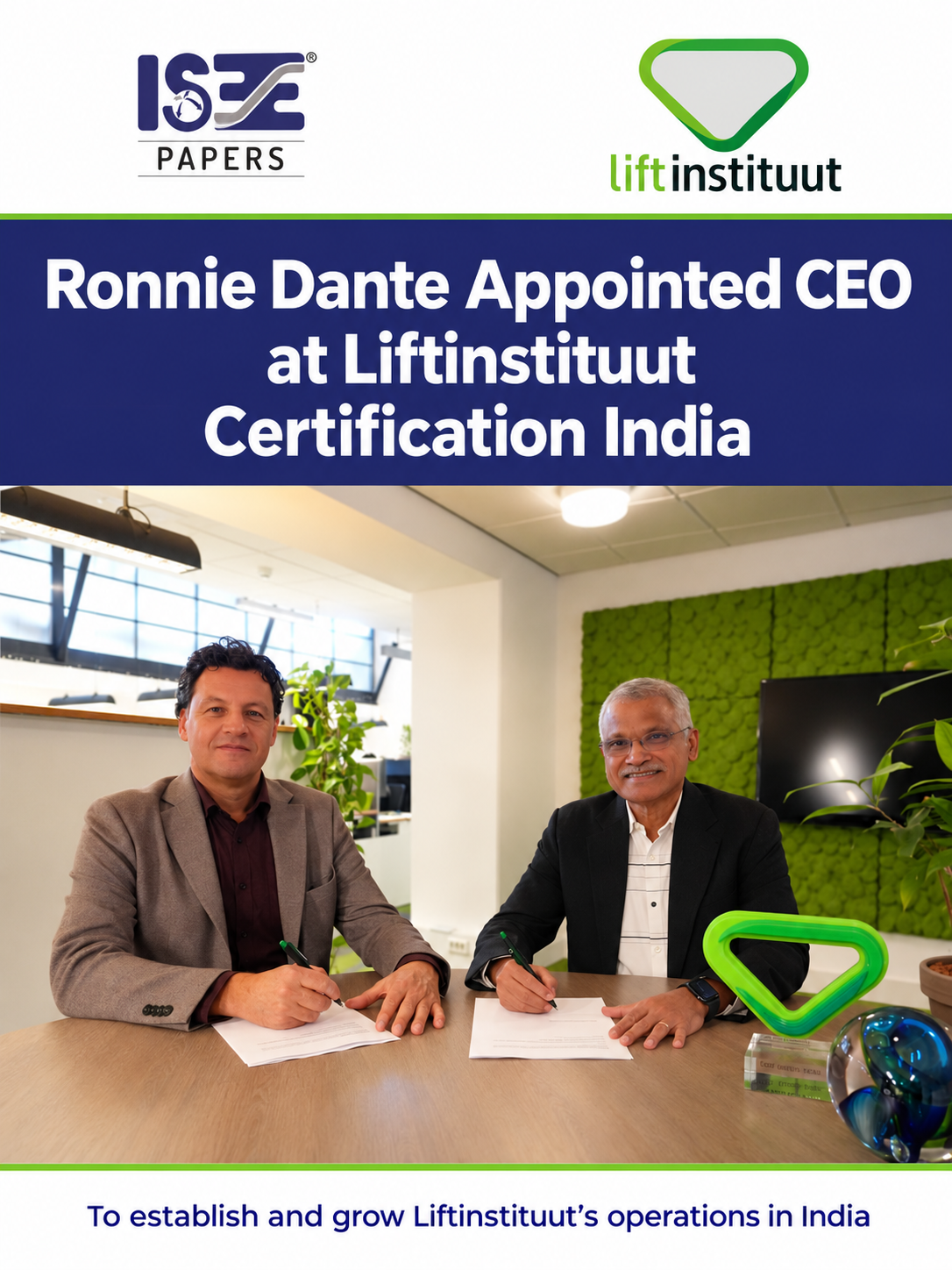
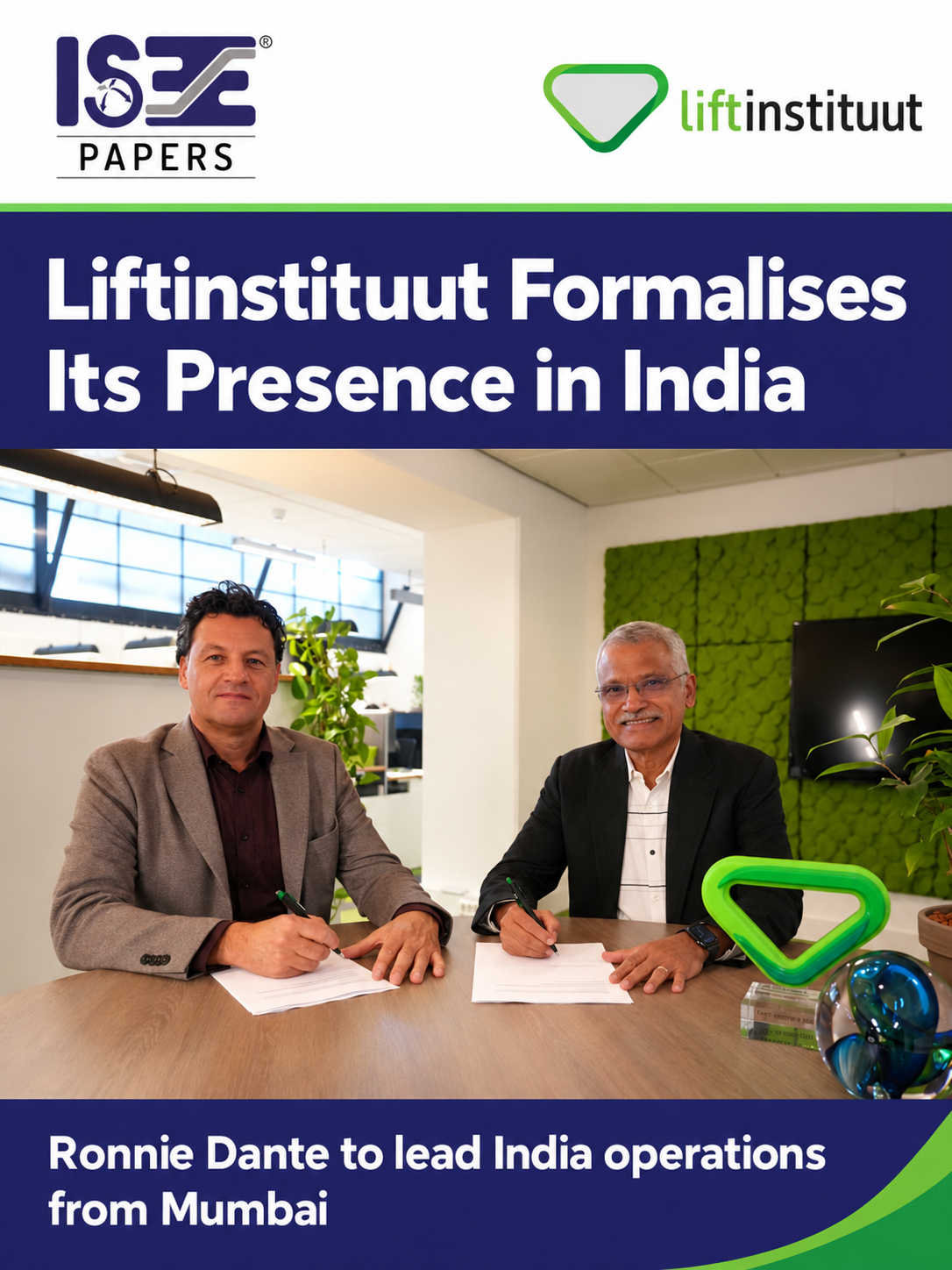
Beyond Nuts & Bolts Ronnie Dante From early setbacks to global leadership, and a life built on discipline beyond work Current Role CEO, Liftinstituut Certification India Pvt. Ltd. Known For Global technical leadership, safety and quality excellence Where It Didn’t Begin As Planned Ronnie Dante’s journey did not begin with a clear roadmap. When his father’s company shut down, he had to discontinue his studies after HSC. The idea of becoming an engineer was put aside, and at 17, he entered the workforce as an apprentice at Otis. What could have remained a compromise became the foundation of something far greater. Curiosity replaced uncertainty. Within months, he was not just installing elevators, he was understanding them, questioning them, and going deeper into the systems behind them. Curiosity That Built a Career By his third year, Ronnie was already handling high-speed gearless elevator installations at the Reserve Bank of India. Alongside hands-on work, he pursued a diploma in Electrical Engineering, building both practical and technical depth simultaneously. Over time, projects, responsibilities, and geographies expanded. From leading large installations like the Gandhinagar Secretariat to resolving challenges internationally, each step strengthened not just his expertise, but his confidence. Building, Scaling, Leading His transition to Schindler during its early India phase marked a defining shift. Moving into a greenfield environment meant building from scratch, systems, suppliers, and credibility. It demanded belief before results. That phase shaped his leadership. What followed was a global journey across Asia Pacific, the Middle East, and eventually Switzerland, leading technical compliance audits and global safety and quality assurance functions. The Second Innings Retirement did not slow him down. It simply redirected him. In 2026, he helped establish Liftinstituut Certification India and now leads it as CEO, building its presence and contributing to the next phase of industry safety and certification in India. Beyond Work What defines Ronnie beyond his professional journey is discipline. During the COVID period, at the age of 60, he began jogging at home. What started small became a routine. Today, he runs over 12 km, multiple times a week. He has also taken up golf post-retirement, continuing to stay active, engaged, and constantly improving. The same mindset that built his career continues to shape his life, consistency, curiosity, and the willingness to keep moving forward. Brief Snapshot Ronnie Dante began his journey as an apprentice and went on to lead global technical, safety and quality assurance functions across Schindler. Today, as CEO of Liftinstituut Certification India, he continues contributing to the industry, while maintaining a disciplined lifestyle through long-distance running and continuous learning.

Abhijit Dandekar – A Journey Beyond the Industry

Beyond Nuts & Bolts ISEE Profiles, Beyond Nuts & Bolts A Journey Beyond the Industry Abhijit Dandekar Director, Codes & Standards (Asia Pacific), Otis Elevator Company Pty Ltd President, Pacific Asia Lift & Escalator Association (PALEA), Singapore Professional Journey An electronics engineer with post-graduation in Marketing Management, Abhijit is working as Director, Codes & Standards (APAC) at Otis’ Asia Pacific RHQ. With more than 38 years of experience at Otis, his expertise spans across multiple functions including R&D, Field Engineering, Training, Quality, Product Safety, Lean Manufacturing, Supply Chain, and Codes & Standards. Responsible for product and process quality, reliability enhancement, customer satisfaction, and product safety improvements, he currently also serves as the President of Pacific Asia Lift & Escalator Association (PALEA), Singapore, with the objective of harmonizing elevator and escalator codes and standards across Asia Pacific and China. He is a member of ISO technical committee TC 178 and its workgroups, CEN TC10 Liaison Member, World Elevator & Escalator Federation (WEEF) and WEEF-GTAG. He has represented the India delegation from the Bureau of Indian Standards in multiple ISO TC178 plenary meetings held across Russia, USA, South Africa, Australia, India, Germany, France, and China. He is also a member of ETD25 (P4 panel), Elevator and Escalator Code Committee of Bureau of Indian Standards, and has liaised with government authorities on amendments to local elevator codes for Maharashtra and Gujarat. In addition, he is a member of CED46 (P16 panel) responsible for drafting the National Building Code of India. Beyond Work Abhijit is also an experienced mountaineer and rock climber. With over 50 pinnacles and walls to his name as first ascents in the Western Ghats, he has also been part of expeditions in the Himalayas, Karakoram, and Alps. He has completed both Basic and Advanced Mountaineering Courses from The Nehru Institute of Mountaineering (NIM), Uttarkashi, securing “A” grade in both. As an expert trekker and mountaineer, he possesses extensive experience navigating technical high-altitude terrain, mastering alpine skills, and executing complex expeditions safely. His background spans from leading technical trekking in remote regions to managing alpine risk, roped climbing, glacier travel, and challenging weather conditions across major mountain ranges. Key Competencies Technical Mountaineering: Proficient in rock and ice climbing, glacier travel, crevasse rescue, and fixed-line systems. High Altitude Expertise: Experienced in expedition climbing and managing the physical and psychological demands of 6000m+ peaks. Risk Management: Skilled in assessing and managing risks related to avalanche, rockfall, and rapid weather changes. Leadership: Experienced in guiding expeditions, leading teams, and mentoring, with a strong focus on safety and high-altitude technique. His focus is on combining meticulous preparation with adaptability, viewing mountains as places for both deep personal challenge and refined skill application. His mountaineering journey has translated directly into corporate strengths, helping him build resilience, strategic planning ability, trust, and leadership in high-stakes environments. Photographic Moments With Sir Edmund Hillary, first man to climb Mount Everest, photographed at NIM, Uttarkashi, October 1987. With Peter Habeler, first man to climb Mount Everest without artificial oxygen in 1978, photographed in Mumbai, February 2012.

Dr. Abhijeet Ashok Joglekar

Beyond Nuts & Bolts Dr. Abhijeet Ashok Joglekar Sales and Marketing Head, Arkel Electronic India Pvt. Ltd. A Sales and Marketing Professional having more than 2 decades of industrial experience in Vertical Transportation Industry. Talking about the pentagon situated on other side of the coin, this represents his journey as a Yoga Practitioner, Tabla Player, Feature Writer, Master of Ceremonies and RTI Activist. A Journey Beyond the Industry His passion for social service has been a life-changing and satisfying experience, cultivated over the years through music, yoga, narration and related pursuits since childhood. Along with his family, he has found harmony in life through the guidance of experienced mentors, close friends, supportive colleagues and his superiors, including the Arkel management. Yoga: Discipline, Balance, and Awareness He maintains his work-life balance through consistent yoga practice. Since the Covid era, his practice at home gained recognition through various Indian newspapers, published in multiple languages and reaching millions of readers across the country. In today’s stressful lifestyle, many individuals are benefiting from yoga and embracing the philosophy of “back to basics” for a better life. Even within the confines of home, yoga remains an accessible and effective way to maintain fitness. RTI Activism: Thinking Beyond the Obvious His inclination to think beyond conventional approaches found expression through his work as a Right to Information (RTI) activist, which was also noted by Elevator World Magazine. Through this work, multiple stakeholders, including elevator companies, component manufacturers and students, have benefitted. Music: A Universal Language For him, music is an ultimate gift to mankind. Through his monologues on varied subjects including Indian Classical Music, accompanied by the traditional Indian percussion instrument, Tabla, he has highlighted its principles for wider audiences in a simplified manner. He strongly believes that music has no boundaries of language, religion and region. Communication, Writing & Cultural Engagement His association with media professionals enhanced his article writing skills for newspapers, which further contributed to his presence at various trade and cultural events as a Master of Ceremonies. He continues to move forward with a commitment to preserving and promoting Indian culture and traditions within today’s ultra-modern world. Closing Note This journey reflects a rare blend of technical excellence and cultural depth, a professional rooted in industry, yet shaped equally by discipline, creativity and social impact. Advertisement Advertisement