









The elevator and escalator markets in Vietnam and Malaysia are expected to expand steadily through 2031, supported by urbanisation, large infrastructure projects, high-rise construction and growing demand for modern vertical-transportation systems.
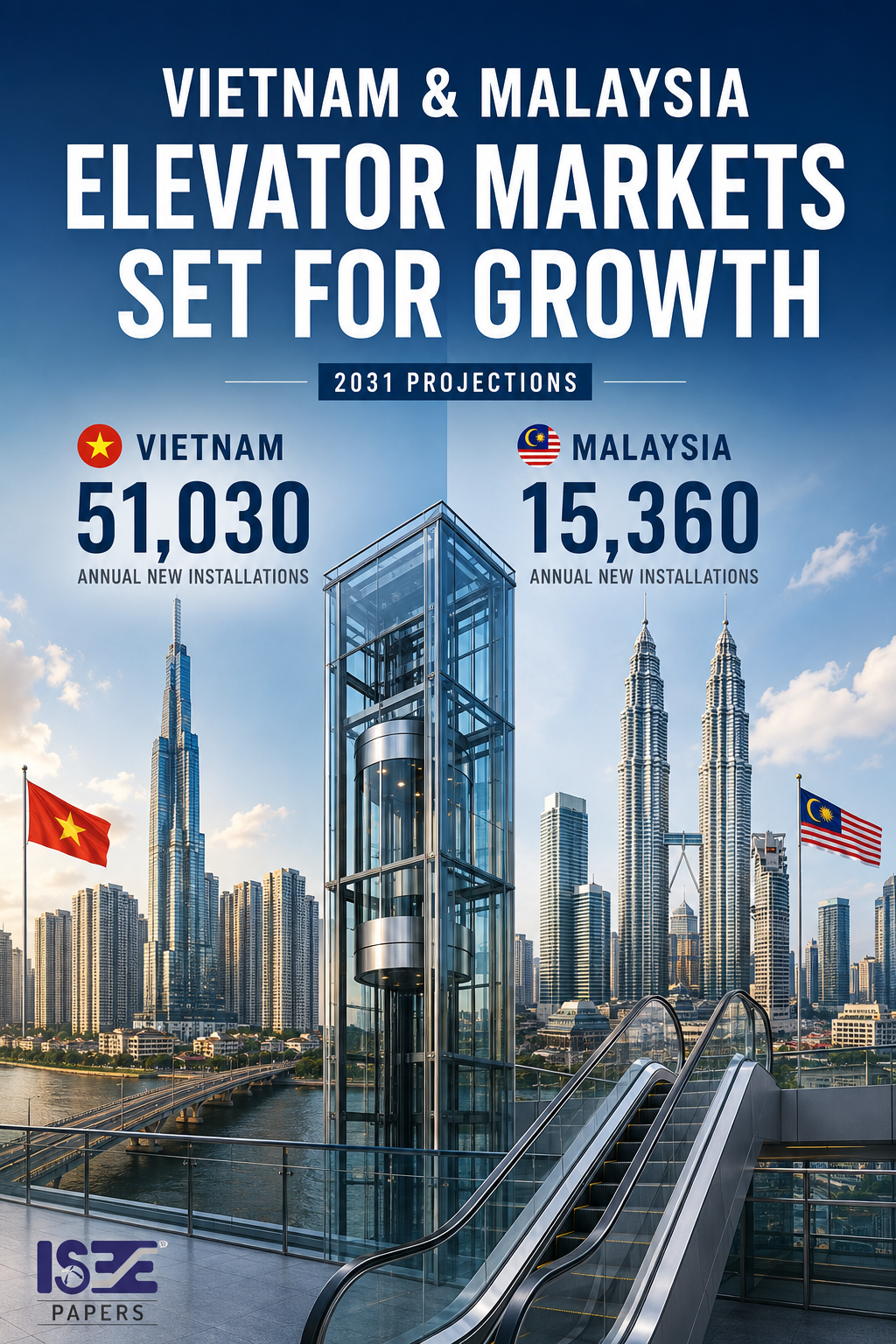
New market forecasts published by Arizton Advisory & Intelligence indicate that Vietnam’s annual new-installation market could reach approximately 51,030 units by 2031. Malaysia is projected to record around 15,360 new installations during the same year.
The findings point to broader opportunities across new equipment, maintenance and modernisation as both Southeast Asian countries invest in residential development, public transport, airports, commercial properties and mixed-use projects.
Vietnam Emerges as the Larger Growth Market
Vietnam’s elevator and escalator market is forecast to grow from approximately 41,720 new installations in 2025 to 51,030 units in 2031. This represents a compound annual growth rate of 3.41% during the forecast period.
The country’s total installed base is projected to reach approximately 751,490 units by 2031, while the value of its modernisation market is expected to rise to USD 32.56 million.
Vietnam’s rapid urban development remains one of the most important factors behind this expansion. Continued construction activity in Hanoi and Ho Chi Minh City is creating demand for passenger elevators across residential towers, offices, hotels and mixed-use developments. Emerging cities are also attracting new investment, helping vertical-transportation demand spread beyond the country’s two largest urban centres.
Public investment is expected to provide additional momentum. According to the report, Vietnam’s public investment reached more than VND 902 trillion, approximately USD 34 billion, in 2025 and could increase to VND 995 trillion, approximately USD 37.8 billion, in 2026.
This expenditure is expected to support transport networks, airports, public buildings and other major infrastructure projects that require reliable elevators and escalators.
Social Housing Could Create Substantial Demand
Vietnam’s social-housing programme represents another significant opportunity for the industry. The country aims to develop approximately one million social-housing units by 2030.
Arizton reports that more than 700,000 units have already been launched, with close to 215,000 units under construction. As many of these developments take the form of multi-storey residential buildings, the programme could generate demand for cost-efficient passenger elevators, maintenance services and accessibility solutions.
Elevators designed for between two and 15 passengers are expected to remain particularly important. This category serves a wide range of residential, commercial and mixed-use buildings and is likely to benefit from the growing number of high-rise projects across Vietnam.
Large developments, including the proposed Aspira Tower in Phú Quốc, also demonstrate the increasing scale and ambition of the country’s construction sector.
Malaysia’s New-Installation Market to Reach 15,360 Units
Malaysia’s elevator and escalator market is projected to grow from approximately 12,990 new installations in 2025 to 15,360 units in 2031. The market is expected to register a compound annual growth rate of 2.83%.
Its total installed base is forecast to exceed 248,340 units by 2031. Malaysia’s modernisation market is expected to reach USD 46.57 million, a higher projected value than Vietnam’s despite the country’s smaller installed base.
The figures suggest that upgrading existing equipment could become an increasingly important business segment in Malaysia. Ageing installations, changing safety expectations, energy-efficiency requirements and the adoption of digital building technologies are likely to encourage property owners to invest in modernisation.
Rail and Urban Development Support Malaysia’s Expansion
Malaysia’s continued investment in urban transport is expected to generate demand for elevators and escalators across stations, interchanges and surrounding developments.
Projects such as the Penang Mutiara Light Rail Transit system and the proposed MRT3 Circle Line could create opportunities for vertical-transportation manufacturers, installation companies and service providers.
Transit-oriented developments are also contributing to demand. These projects combine residential, retail, office and transport infrastructure within connected urban districts, creating the need for multiple elevator and escalator systems within a single development.
Government programmes such as the 13th Malaysia Plan and the New Industrial Master Plan 2030 are expected to support long-term construction and infrastructure investment. Growth in hospitality and retail linked to Visit Malaysia 2026 may provide further opportunities for new installations and upgrades.
Machine-Room-Less Elevators Gain Ground
Machine-room-less elevators accounted for a significant share of Malaysian installations in 2025. New installations in this category are forecast to grow at a compound annual rate of 2.96% through 2031.
Their space-saving design makes them suitable for residential and commercial projects where developers want to maximise usable building area. As construction moves toward more efficient and integrated building designs, demand for these systems is expected to remain steady.
The wider adoption of connected controls, remote monitoring and energy-efficient equipment may also influence purchasing decisions in both Malaysia and Vietnam.
Opportunities Extend Beyond New Equipment
Although new construction remains a central growth driver, the forecasts underline the increasing importance of long-term service relationships.
A growing installed base creates continued demand for preventive maintenance, component replacement, safety improvements and full-system modernisation. It also opens opportunities for digital monitoring platforms that help building owners track performance, identify faults and reduce equipment downtime.
Manufacturers and service providers operating in these markets will need to balance competitive pricing with reliability, safety compliance and strong after-sales support. Local service capabilities could become particularly important as installations expand into emerging cities and new development zones.
A Positive Outlook for Southeast Asian Vertical Transportation
Vietnam and Malaysia are developing at different scales, but both markets are moving in the same direction. Urban growth, infrastructure investment and changing building requirements are increasing the need for reliable, efficient and connected vertical mobility.
Vietnam is expected to offer greater installation volumes, driven by its large residential pipeline and rapid urban expansion. Malaysia presents a smaller but established market, with notable potential in modernisation, transit infrastructure and machine-room-less systems.
The forecasts remain dependent on construction timelines, public investment and broader economic conditions. However, the projected growth in installations and installed equipment indicates that both countries could remain important markets for the global elevator and escalator industry through 2031.
The market figures in this article are forecasts published by Arizton Advisory & Intelligence and distributed through PR Newswire.