









BIS Highlights NBCS 2026 as India Prepares for Safer Vertical Growth
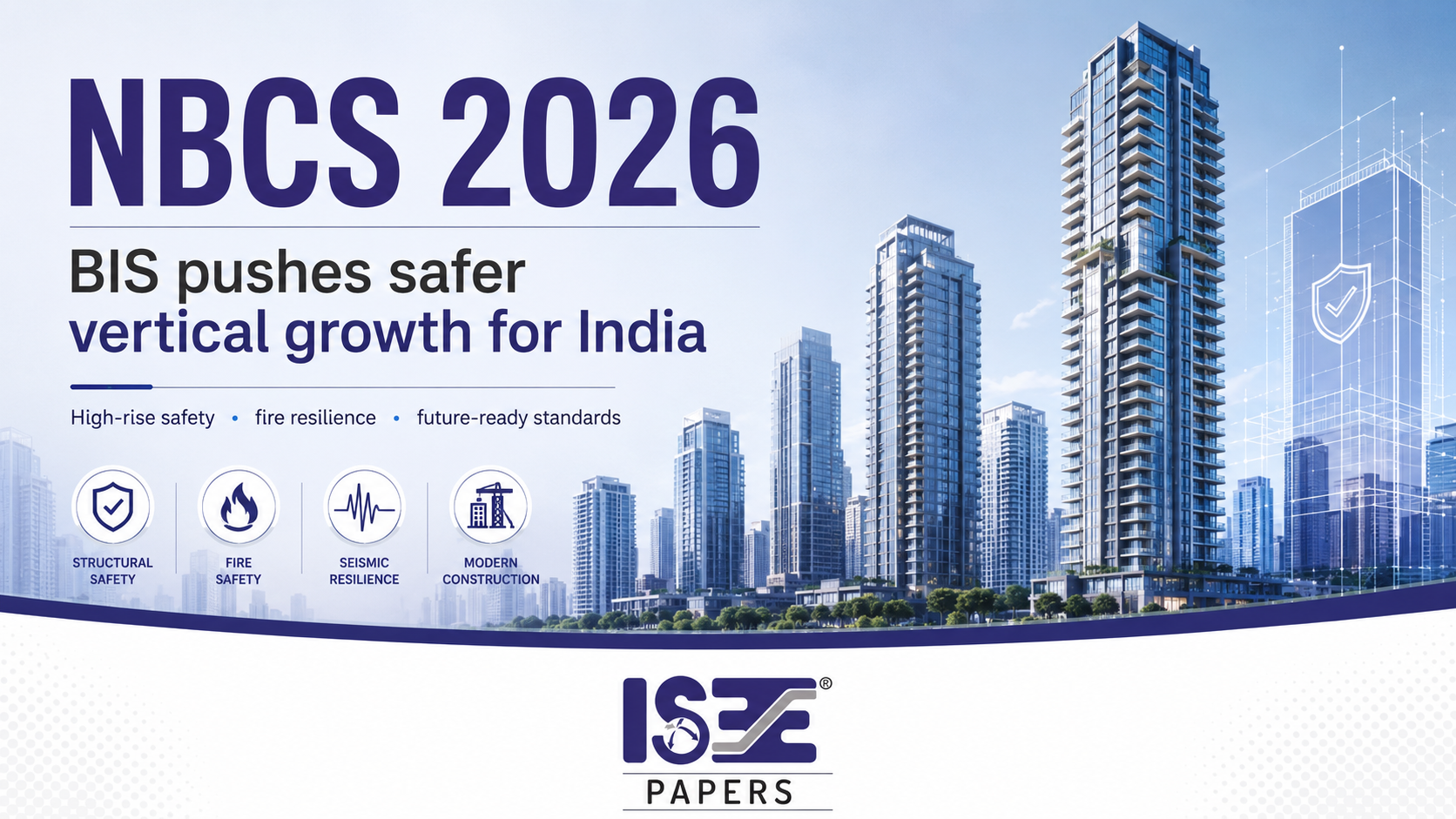
As Indian cities continue to rise higher, the conversation around urban development is shifting from speed of construction to safety, resilience and long-term sustainability. The Bureau of Indian Standards (BIS) has brought this discussion into focus through a detailed interview with Shri Sanjay Pant, DDG Standardization, on the newly released National Building Construction Standards 2026 (NBCS 2026).
The interview, published on the official BIS YouTube channel, explains how NBCS 2026 aims to support India’s rapidly expanding built environment by strengthening building safety, improving construction practices and preparing the country for the infrastructure needs of Viksit Bharat 2047.
NBCS 2026 is being positioned as a major construction blueprint for India’s next phase of urban and infrastructure growth. It covers a wide range of issues, from preventing structural collapses and improving fire safety to regulating mixed-use buildings, healthcare infrastructure, glass façades, EV charging infrastructure and emerging construction technologies.
One of the most important themes of the discussion is safety. Shri Pant explains that the standards are built around four major pillars: structural safety, fire safety, public health safety and construction safety. These areas are especially critical as Indian cities witness a sharp rise in high-rise residential towers, commercial complexes, hospitals, hotels and mixed-use developments.
The relevance of the new standards becomes even stronger in the context of recent building collapses and fire-related incidents across the country. NBCS 2026 places strong emphasis on compliance, enforcement support, state-level adoption and training. The objective is not only to create a technical document, but to ensure that the standards are understood and applied by those involved in planning, designing, constructing and approving buildings.
A major focus area is fire safety in high-rise and complex buildings. With dense urbanisation and taller buildings becoming common, evacuation planning, fire compartmentalisation, safe escape routes and building-specific fire safety measures are becoming essential. NBCS 2026 addresses these concerns by providing clearer guidance for different building types and occupancies.
The standards also bring important changes for healthcare infrastructure. Earlier height-related limitations for hospitals are being relooked in favour of safer technical solutions. The interview highlights the role of progressive horizontal evacuation and strict fire compartmentalisation in hospital buildings. This is significant for India, where urban hospitals increasingly need to expand vertically due to limited land availability.
Seismic safety is another key area covered under NBCS 2026. India has diverse geological and seismic zones, which means buildings cannot follow a one-size-fits-all approach. The standards focus on earthquake-resistant design, rapid visual screening, retrofitting of older structures and progressive auditing of lifeline buildings. This is especially important for public buildings, hospitals, schools and other critical infrastructure.
NBCS 2026 also addresses the realities of modern urban architecture. Provisions related to structural glazing, curtain walls and glass façade buildings reflect the changing skyline of Indian cities. These design elements may improve aesthetics and energy performance, but they also require clear safety, fire protection and maintenance considerations.
The inclusion of EV charging infrastructure and basement parking guidelines shows that the standards are also responding to changes in mobility and building use. As electric vehicles become more common, residential and commercial buildings will need safer and better-planned charging infrastructure, especially in basement and parking areas.
Another future-facing feature is the inclusion of provisions for 3D-printed concrete construction. This signals that India’s building standards are beginning to account for new construction methods and global technologies, while still keeping safety and compliance at the centre.
For the elevator and escalator industry, NBCS 2026 is especially relevant. As buildings become taller, denser and more mixed-use in nature, vertical transportation is no longer just a convenience. It becomes part of the building’s safety, accessibility, emergency movement and operational planning.
High-rise residential towers, hospitals, commercial complexes and mixed-use developments all depend on efficient elevator planning. Passenger movement, stretcher movement, goods movement, emergency access, evacuation strategy, fire safety integration and maintenance access must all work within the larger building safety framework.
This makes NBCS 2026 an important reference point for architects, developers, consultants, elevator companies, fire safety professionals and urban planners. The standards reinforce the idea that vertical growth must be supported by safer building systems and better coordination between structure, services and mobility.
The interview also highlights India’s growing role in international standardization. According to Shri Pant, India is moving from being a follower of global standards to becoming a leader in this space. Developing nations across Africa and Latin America are also looking at Indian standards and BIS frameworks as reference models for their own national codes.
As India moves towards Viksit Bharat 2047, NBCS 2026 could become one of the most important technical foundations for the country’s built environment. It reflects the need for buildings that are not only taller and more advanced, but also safer, more resilient and more sustainable.
For a country experiencing rapid vertical growth, NBCS 2026 sends a clear message: the future of Indian construction must be built on safety, compliance and long-term responsibility.
Disclaimer: This article is published for informational and editorial purposes only. Views expressed may not reflect those of ISEE Papers. We do not guarantee accuracy or completeness. For full details, please read our complete disclaimer here: ISEE Papers Website Disclaimer