


The Managing Director of TAK Consulting has been recognised among the influential women shaping India’s construction and infrastructure landscape in 2026.
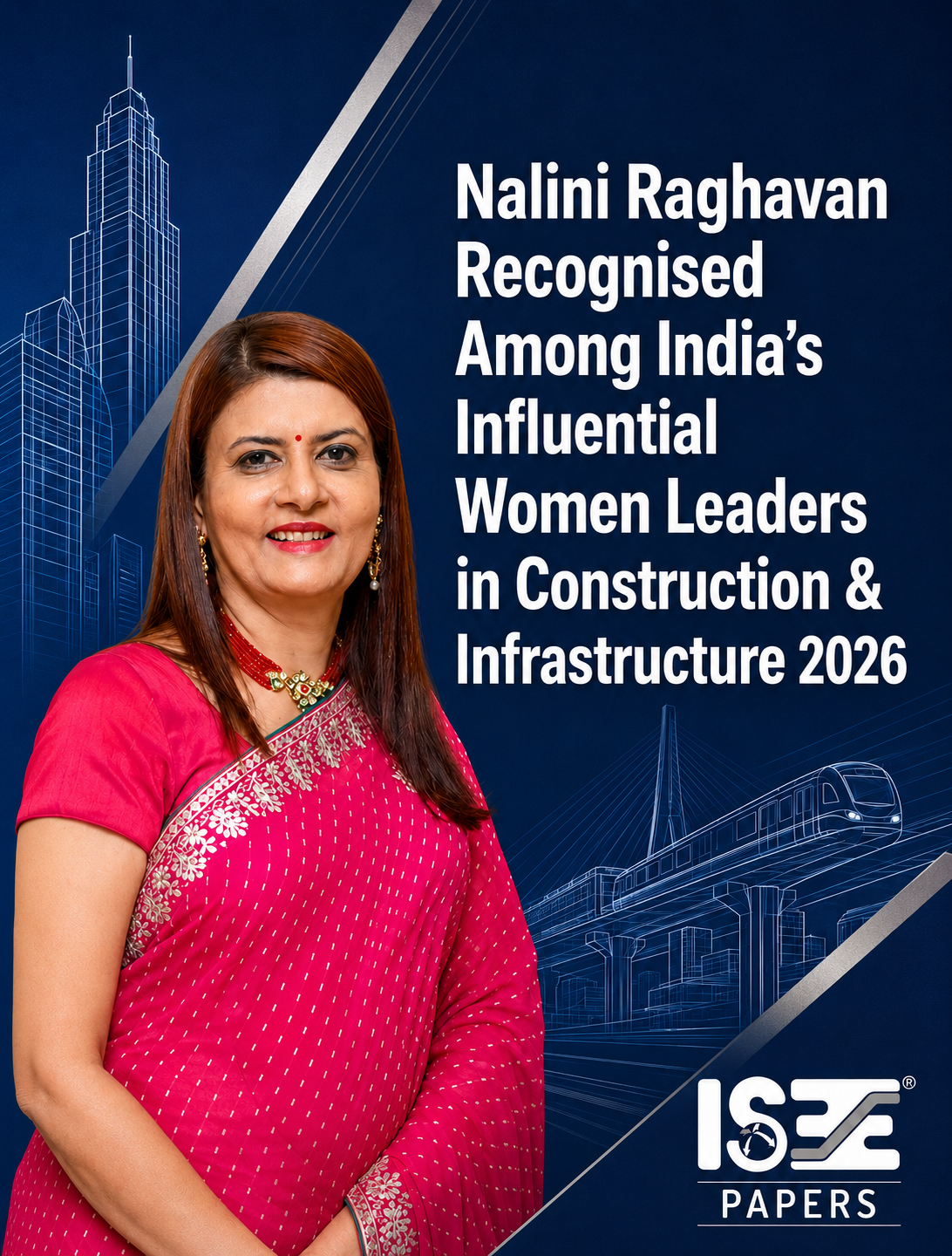
Nalini Raghavan, Managing Director of TAK Consulting Pvt. Ltd., has been featured in Prime Insights’ “Most Influential Women Leaders in Construction and Infrastructure 2026” edition. The recognition highlights her contribution to independent vertical transportation consulting, particularly in elevator traffic analysis, project planning and sustainable building mobility. Prime Insights
Under Raghavan’s leadership, Mumbai-based TAK Consulting advises developers, architects and project teams on the planning, specification, inspection and modernisation of elevators, escalators and moving walks. The company describes itself as an independent vertical transportation consultancy and an ISO 17020-accredited inspection body. TAK Consulting
An Unconventional Route into Vertical Transportation
Raghavan’s professional journey differs from the conventional engineering route into the elevator industry. A mathematics graduate with an MBA, she began her career in marketing within the iron and steel sector before moving into enterprise software.
Her analytical education and commercial experience later became valuable in vertical transportation consulting, where technical calculations must be balanced with a project’s operational, financial and user requirements.
Her interest in the built environment was also influenced by her family. Both her father and grandfather were civil engineers, giving her early exposure to the role infrastructure plays in the development of cities.
The rapid redevelopment of Mumbai’s former mill lands during the early 2000s became an important stage in her career. As developments grew taller and denser, the movement of occupants within high-rise buildings became a critical design consideration. Elevator traffic analysis offered Raghavan an opportunity to combine mathematical modelling with practical building planning.
Making Elevator Planning Part of the Design Process
A central theme of Raghavan’s work is that vertical transportation should be considered during the conceptual stage of a project, rather than after the building layout has largely been finalised.
Traffic analysis allows consultants to estimate how occupants will move through a building during periods of peak demand. This helps project teams determine the required number of elevators, their capacities, speeds, zoning and control systems.
Accurate analysis can also prevent projects from installing more equipment than necessary or providing an inadequate system that leads to congestion, extended waiting times and operational difficulties.
For developers, this approach can improve passenger movement while controlling capital expenditure, energy consumption and the amount of building space assigned to elevator cores.
From Technology to Practical Building Solutions
Raghavan also sees independent consultants as an important link between technology providers and project stakeholders.
Modern vertical transportation systems increasingly interact with access control, security and building management platforms. In commercial developments, destination control systems can identify a passenger’s floor through an access card and allocate an appropriate elevator before the passenger reaches the lobby.
However, the availability of advanced technology does not automatically make every solution suitable for every building. Consultants must evaluate a project’s occupancy, traffic patterns, operational expectations and budget before recommending a system.
This independent assessment helps project teams distinguish between technology that delivers measurable value and features that may not be necessary for a particular development.
Sustainability Through Better System Planning
Sustainability is another area in which vertical transportation planning can influence a building’s long-term performance.
Raghavan supports the consideration of energy-conscious technologies such as regenerative drives, which can recover energy produced during elevator operation and return it for use within the building’s electrical system.
She also emphasises the environmental value of correctly sizing elevator systems. Installing unnecessary equipment increases the use of materials, energy and building space. Under-designing a system can create performance problems and lead to premature modernisation.
As a LEED Accredited Professional, Raghavan brings green-building considerations into vertical transportation recommendations, alongside safety, passenger comfort and operational efficiency.
Landmark Projects and Industry Milestones
Among the significant assignments in her career was TAK Consulting’s involvement in a major Reliance development in Mumbai alongside international vertical transportation consultants Van Deusen and Associates.
TAK Consulting initially participated as a local consulting partner. Its role later expanded, with the company eventually taking responsibility as the lead consultant. The development became an important demonstration of the firm’s ability to manage complex, large-scale vertical transportation requirements.
Another major milestone was TAK Consulting securing ISO 17020 accreditation for its inspection activities. The accreditation provides a formal framework for competence, consistency and impartiality in inspection services.
For an industry in which equipment safety and regulatory compliance are essential, independent inspection capabilities can provide developers, building owners and facility managers with an objective assessment of elevator and escalator systems.
Building an Adaptable and Collaborative Team
Raghavan’s leadership approach centres on maintaining a lean team with clearly assigned responsibilities. Instead of using large teams for complex projects, TAK Consulting works through smaller groups of specialists supported by structured project management and regular communication with clients.
The company also encourages employees to explore roles suited to their strengths. Technical professionals showing an interest in business development, for example, may be given opportunities to contribute across functions.
Flexibility has played a role in retaining experienced employees as well. Remote-working arrangements have enabled team members to continue managing projects despite relocating, demonstrating how specialist consulting roles can adapt without compromising client delivery.
Internal presentations and knowledge-sharing sessions are used to encourage continuous learning. Junior engineers are given opportunities to present their work, allowing them to develop confidence while bringing new perspectives to the wider team.
A Broader View of Leadership
Beyond commercial projects, Raghavan supports community initiatives through Rotary, including rural solar installations, computer laboratories and skill-development programmes for marginalised communities.
Her career reflects the expanding role of vertical transportation consultants in India’s rapidly changing urban environment. As buildings become taller, more connected and more complex, elevator planning is increasingly being treated as a strategic element of building design.
Raghavan’s work demonstrates how analytical thinking, independent advice and disciplined project management can help create vertical transportation systems that are safer, more efficient and better aligned with the needs of their users.